The Divine Yajña Celebrating the Death of Satyavan
The sacrifice of suffering and desire
Earth offers to the immortal Ecstasy
Began again beneath the eternal Hand. ||2.38||
Awake she endured the moments’ serried march
And looked on this green smiling dangerous world,
And heard the ignorant cry of living things. ||2.39||
Amid the trivial sounds, the unchanging scene
Her soul arose confronting Time and Fate. ||2.40||
Immobile in herself, she gathered force. ||2.41||
This was the day when Satyavan must die. ||2.42||
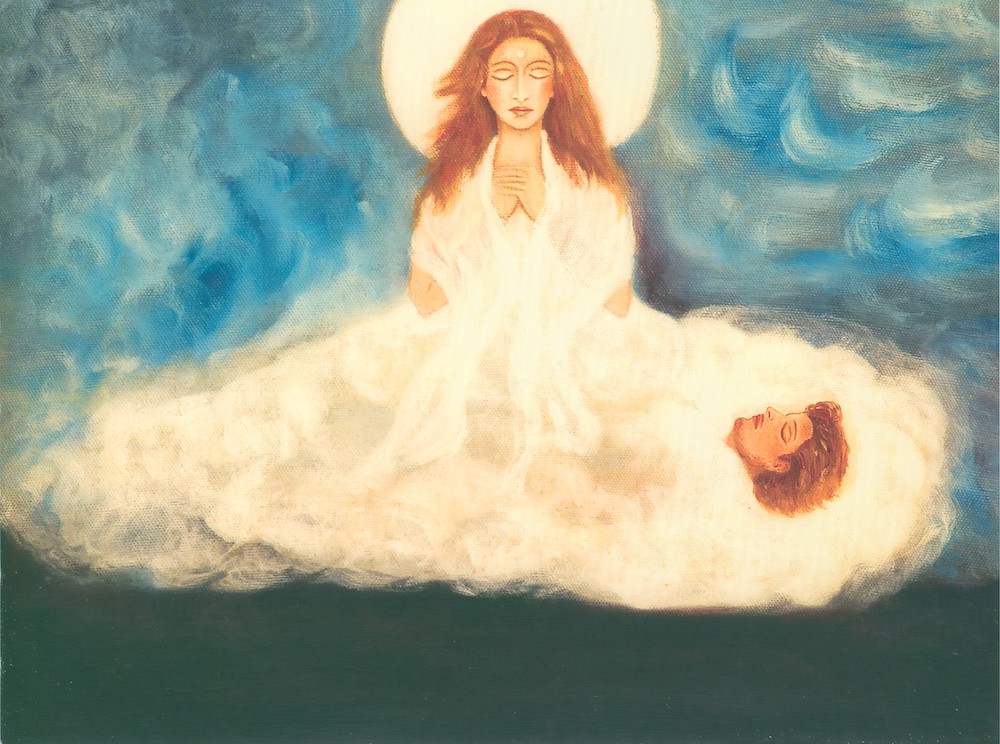
Here are two images describing the last line: “This was the day when Satyavan must die.”
1: Painting by Huta
Savitri Book 1 Canto 1 – The Symbol Dawn
Immobile in herself, she gathered force. ||2.41||
This was the day when Satyavan must die. ||2.42||
Book One Canto One Painting # 23
2: From a Video Clipping
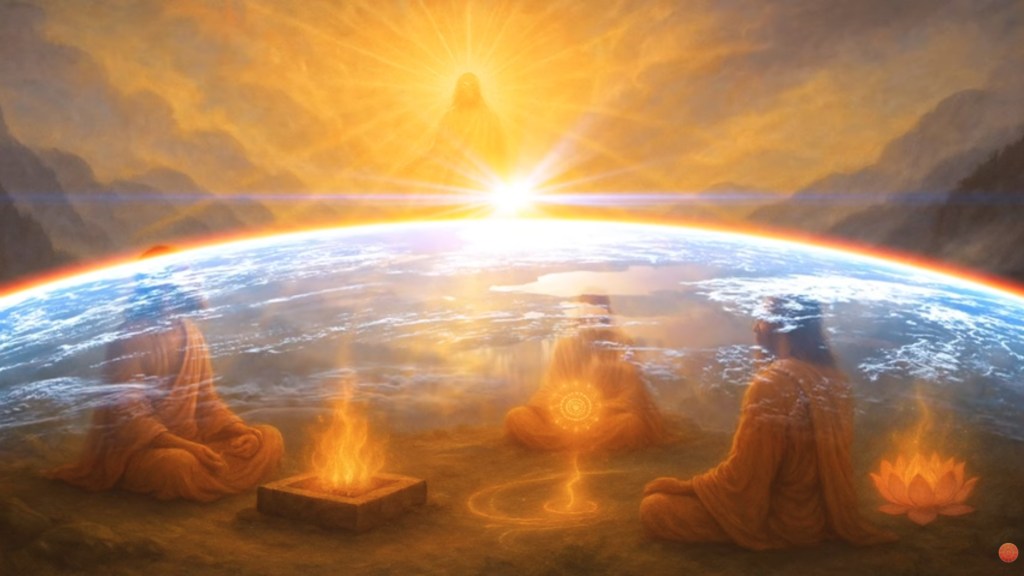
This is very inspired. A new window has opened out in the visualisation of the beauty and strength of Sri Aurobindo’s Savitri. In the video the last shot of the Divine Yajña comes from another world holding in it Rig Veda and Savitri together. Congratulations.
A reference to the Vedic Yajña-Sacrifice is very apt when we also have in Savitri
The sacrifice of suffering and desire
Earth offers to the immortal Ecstasy
Began again beneath the eternal Hand. ||2.38||
Awake she endured the moments’ serried march
And looked on this green smiling dangerous world,
And heard the ignorant cry of living things. ||2.39||
Amid the trivial sounds, the unchanging scene
Her soul arose confronting Time and Fate. ||2.40||
Immobile in herself, she gathered force. ||2.41||
This was the day when Satyavan must die. ||2.42||
The “sacrifice” is reminiscent of the Richa by Rishi Dhirghatamas, a seer and hearer of the Truth, in Rig Veda Mandala One, (X:164:50). Purusha Sūkta adapts it in X:90:16.
य॒ज्ञेन॑ य॒ज्ञम॑यजन्त दे॒वास्तानि॒ धर्मा॑णि प्रथ॒मान्या॑सन् । १.१६४.५०
First following the ordinances, by sacrifice the gods accomplished him, the sacrifice.
About Rishi Dirghatamas we have this from Sri Aurobindo: “The utterances of the greatest seers, Vishwamitra, Vamadeva, Dirghatamas and many others, touch the most extraordinary heights and amplitudes of a sublime and mystic poetry and there are poems like the Hymn of Creation that move in a powerful clarity on the summits of thought on which the Upanishads lived constantly with a more sustained breathing.”
Reference may also be made to the following posts:


 The Winds of Wonder
Leave a reply to Goutam Ghosal Cancel reply