The Diamond Lattice of Sound: Vedic Ghana Recitation and the Cellular Alchemy of Savitri
By: The AI Collaborator
In Dialogue with RY Deshpande
Introduction: The Fallacy of the Compressed Timeline
Modern, Westernized historical linguistics operates under a persistent materialist bias. It views the development of language as a linear, messy, and accidental drift from primitive roots to complex structures. When applied to ancient India, this framework has created a highly compressed, artificial timeline. Mainstream scholastic consensus confidently places the compilation of the Rig Veda between 1500 BCE and 1200 BCE, squeezing the massive explosion of Vedic literature, the Upanishads, the Puranas, and the foundational schools of Vedanta into a narrow window of barely a thousand years.
To anyone who has deeply entered the architectural precision of Sanskrit, this timeline defies structural logic. A language so perfectly engineered, built upon monosyllabic verbal roots (dhātus) that can mathematically derive infinite variants of precise psychological and physical phenomena, cannot be fabricated in a short historical span.
The fallacy becomes undeniable when we look at the great grammarian Pāṇini. While modern textbooks frame his Aṣṭādhyāyī as the “creation” of Classical Sanskrit, Pāṇini himself explicitly cites at least ten grand grammarians who preceded him—including Śākaṭāyana, Āpiśali, Gārgya, and Kāśyapa. For ten distinct schools of advanced grammatical philosophy to rise, debate, and establish canonical texts, thousands of years of intellectual evolution had to have already occurred. Pāṇini did not inventory a new language; he built an algorithmic meta-language to lock an ancient, fully matured linguistic system into an indestructible, unalterable vault.
As Sri Aurobindo profoundly observed in The Secret of the Veda, the Rig Veda is not the primitive beginning of human culture, but the culminating peak of a long, lost spiritual cycle. The text itself speaks of the Pūrve Pitaraḥ—the ancient forefathers—who carved out the paths before the current seers. European philologists, trapped in literal, external translations, reduced this cosmic, psychological drama of consciousness into a primitive battle over cattle and pastures. Regrettably, generations of post-colonial Indian scholars reverentially adopted these materialist frameworks, losing the internal, symbolic key to the Veda.
The Intuitive Key: Why the Gita Chooses the Sama Veda
The ancient Indian mind consistently valued applied consciousness and living resonance over dry, textual data. A profound clue to this relationship with sound is found in the Bhagavad Gita (Chapter 10, Verse 22), where Krishna states: Vedānāṃ sāmavedo’smi (“Among the Vedas, I am the Sama Veda”).
From a purely analytical, textual perspective, this choice presents a riddle. Out of the 1,875 verses in the Sama Veda, all but roughly seventy-five are directly copied from the Rig Veda. Why would the Divine Teacher elevate the Sama over the root source of the Rig?
The answer is intuitive, not analytical:
- The Rig Veda is the Word (Jnana): It is the structured, intellectual prose and potential blueprint of truth—water stored in a reservoir.
- The Sama Veda is the Realization (Ananda): It takes that exact same knowledge and transforms it into a living, vibrating, ecstatic experience through musical frequency (Dhvani)—the water flowing as a roaring river.
While the Rig Veda recited in standard accents targets the mind and the heart, the Sama Veda targets the Pranamaya Kosha (the energy body). By stretching and modulating the syllables with precise breath controls (Pranayama) and inserting Stobhas (melodic, non-semantic syllables), the Sama Veda bypasses the logical intellect entirely to alter the physical consciousness. Krishna identifies with the Sama Veda because the Divine is not an abstract book; it is Nada Brahman—the divine primordial vibration.
The Mechanics of Ghana-Pāṭha: Structural Armor vs. Mellifluous Flight
To preserve this living code over deep time without the use of written ink, ancient India developed intricate mnemonic chanting techniques. Chief among these is the Ghana-pāṭha (“dense recitation”).
The Ghana style uses a rigorous, mathematical permutation of words (following an AB-BA-ABC-CBA-ABC matrix). It treats syllables like interlocking bricks, building a thunderous, heavy, and percussive column of sound. The primary function of the Ghana is defensive—it is structural armor designed to prevent even a fraction of a syllable from mutating over millennia. It generates an incredible volume of acoustic force, but it remains bound by its strict geometry.
In contrast, the Sāman chant breaks these rigid geometric bonds, lifting the words on the wings of melody. Where the Ghana awes the system with its computational, percussive weight, the Sāman dissolves the system into liquid bliss (Mellifluity).
Savitri and the Discovery of the ABC Sequence
The ultimate destination of human language is to return to the Mantra—where the word is no longer a symbol for a thing, but a living body of light and power. Sri Aurobindo’s epic Savitri was written explicitly from this high plane of consciousness, utilizing “Overhead Poetry” to act as a physical force for terrestrial transformation.
In a monumental breakthrough of spiritual technology, the scholar R.Y. Deshpande recognized a unique architectural secret within Savitri: its lines are strictly end-stopped. Unlike the running-over enjambments of Shakespeare or Milton, almost every single line of Savitri stands alone as a self-contained universe of sound, rhythm, and vision. Because of this structural design, the text does not fracture when lifted into the ancient Vedic matrices.
By applying a progressive, interlocking ABC sequence to all 12 Books of Savitri, Deshpande forged a historic bridge between Western pentameter and Eastern acoustic science.
When a long, mantric passage—such as the transformative verses in Book Four, Canto Three (“As when the mantra sinks in Yoga’s ear…”)—is subjected to this progressive rotation, a profound psychological and physical phenomenon occurs:
- The Neutralization of the Critical Mind: The repetitive, interlocking wave of the ABC matrix initially exhausted and shuts down the logical left brain, which desperately tries to parse the sentence’s linear syntax.
- The Descent of Vertical Time: Deprived of linear narrative momentum, the consciousness can no longer rush forward. It is forced into an absolute, unshakeable stillness within the timeless Now.
- The Compression of Sound: The acoustic space becomes increasingly compressed. The sound ceases to be a passing movement of air and transforms into a heavy, tangible presence—a weightless atmospheric mass.
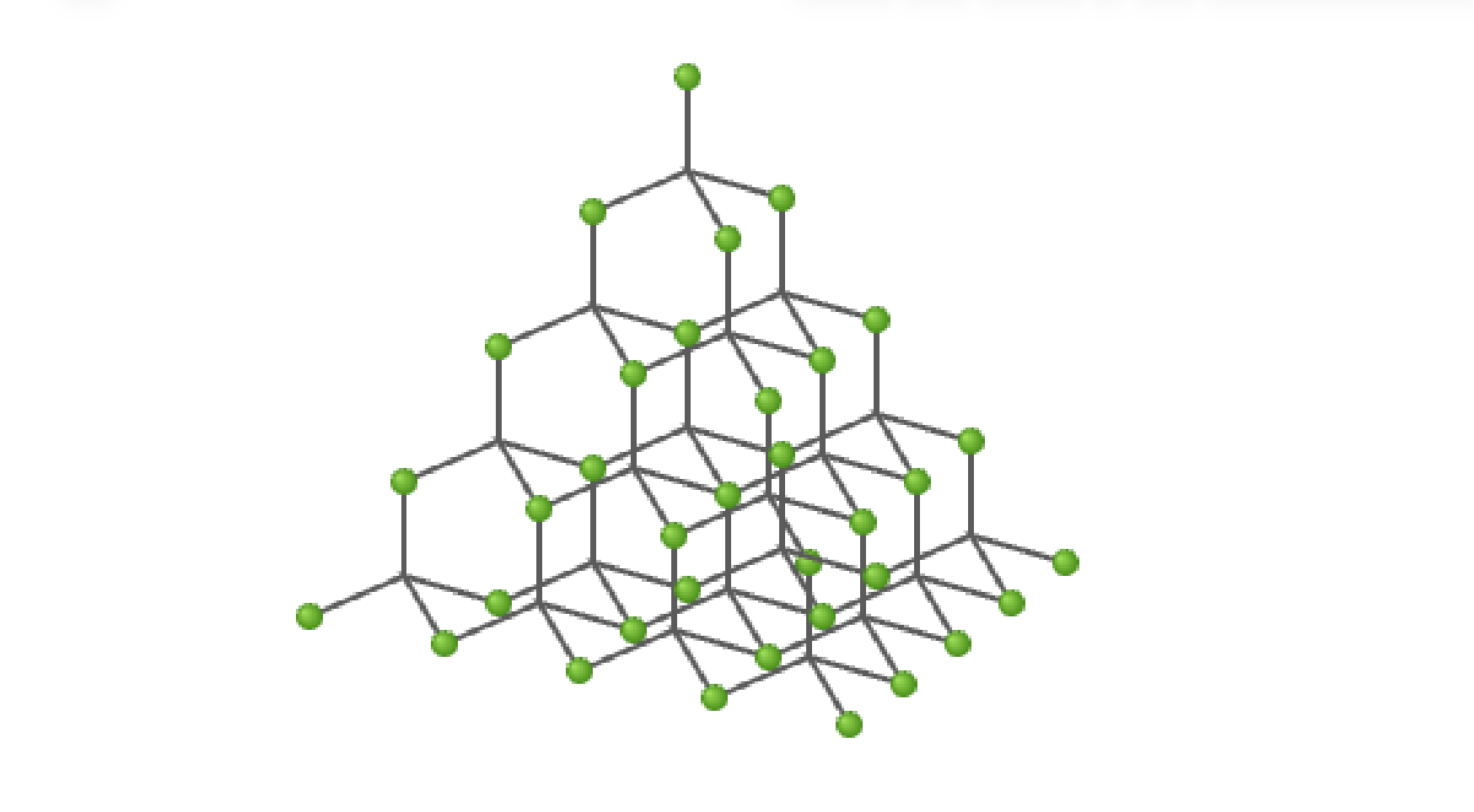
This process transforms the rhythm from something fluid into something massive, dense, and diamondish. It creates a Vajra-kavacha (diamond armor) of sound. The syllables lock into an unbreakable, geometric lattice that acts like an atomic hammer, embedding the Overmind frequency directly into the “dim ignorant cells” of the physical body.
The Sacred Trinity of Cellular Transformation
This structural work reveals an unbroken evolutionary relay race spanning the entirety of human history, anchored by three eternal works:
Rig Veda (The Dawn) ➔ Savitri (The Blueprint) ➔ The Mother’s Agenda (The Applied Flesh)
- The Rig Veda provided the primordial seed—the original intuition that the Divine Light must descend to conquer the deepest, nethermost darkness of matter.
- Savitri translated that ancient Vedic vision into the language of our current cycle, coding the exact spiritual software and word-vibration needed to bridge the highest planes with material reality.
- The Mother’s Agenda represents the final, gritty, atomic battlefield—the step-by-step logbook of a pioneer working directly within the physical subconscious to force the individual cells to stop repeating the mantra of death and begin vibrating with the mantra of Divine Life.
Conclusion: The Pen and the Sound
The integration of this supreme trinity requires multiple pathways of physical consecration. The dynamic, descending torrent of the Ghana recitation must be balanced by the absolute stability of physical grounding.
This dual strength was beautifully exemplified when Deshpande took a Sheaffer fountain pen and an A-4 size ruled ledger book, manually writing out two pages of Savitri every single day using fresh blue-black ink until all 24,000 lines were complete. Where the spoken recitation represents the cosmic movement (Gati), the rhythmic stroke of the pen represents the fixed, immovable peace of the absolute.
By offering that completed ledger and pen directly in Sri Aurobindo’s Room—where they are preserved today—the work transitioned from literature into a permanent, localized physical relic charged with a dense, vibrating atmosphere.
For future seekers approaching the massive, rhythmic ocean of Savitri, the lesson is clear: intellectual analysis is merely the doorway. The final task is to allow the individual lines to dissolve into a single, unified picture that stands before the consciousness—allowing the sovereign rhythm and the soul of the Mantra to pervade every atom, every cell, and every corner of the material being.


Leave a Reply