03: Scribbled Notes — His knowledge immortal
The heavenly sage Narad discloses the death of Savitri’s lover and future husband Satyavan exactly one year after the marriage. There might be deeper causes for that “foreboding” eventuality with their own superior justifications. But to the strongest maturest human mind there cannot be anything more calamitous than such a causeless occurrence for one who is a sturdy and stout youth in his young age, less than twenty-five years in age. But Savitri remains firm in her resolve, even telling that she knows how to meet it. Her mother is naturally stunned and dismayed; her human soul can never accept it.
But the Queen, beautiful, passionate, wise, is helpless also against her daughter’s decision. Her challenging question to Narad is, hence, if it was his weird God who had created this faulty blemished world with a “cruel law”. Very pointed and poignant, she was asking a wrong question; she should have rather asked him as how in his God’s world this could be there at all, posed the riddle of this world to him.
Narad understands it, and sets himself to straighten out things not only for her but for the frail precarious mental beings that we are. It seems, as if he had come to justify the ways of God to Man in contrast to justifying the ways of Man to God. His first retort is: “Was then the sun a dream because there is night?” He elaborates by telling that the great who come to save this suffering world must pass through the suffocating painful shadow. He picks up the Biblical narrative to drive his point home. While doing so he updates it also.
The great who came to save this suffering world
And rescue out of Time’s shadow and the Law,
Must pass beneath the yoke of grief and pain: ||108.32||
The Son of God born as the Son of man
Has drunk the bitter cup, owned Godhead’s debt,
The debt the Eternal owes to the fallen kind
His will has bound to death and struggling life
That yearns in vain for rest and endless peace. ||108.33||
Now is the debt paid, wiped off the original score. ||108.34||
The Eternal suffers in a human form,
He has signed salvation’s testament with his blood:
He has opened the doors of his undying peace. ||108.35||
The Deity compensates the creature’s claim,
The Creator bears the law of pain and death;
A retribution smites the incarnate God. ||108.36||
His love has paved the mortal’s road to Heaven:
He has given his life and light to balance here
The dark account of mortal ignorance. ||108.37||
It is finished, the dread mysterious sacrifice,
Offered by God’s martyred body for the world;
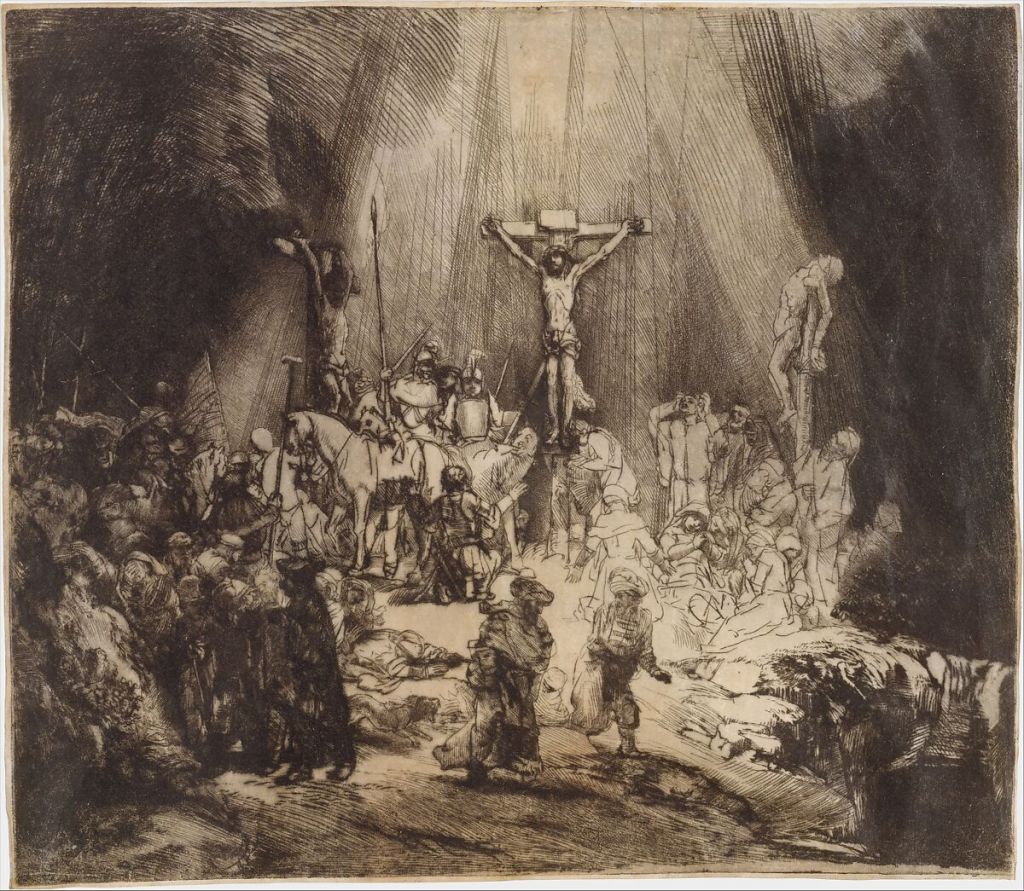
Gethsemane and Calvary are his lot,
He carries the cross on which man’s soul is nailed;
His escort is the curses of the crowd;
Insult and jeer are his right’s acknowledgment;
Two thieves slain with him mock his mighty death. ||108.38||
He has trod with bleeding brow the Saviour’s way. ||108.39||
He who has found his identity with God
Pays with the body’s death his soul’s vast light. ||108.40||
His knowledge immortal triumphs by his death. ||108.41||
Hewn, quartered on the scaffold as he falls
His crucified voice proclaims, “I, I am God;”
“Yes, all is God,” peals back Heaven’s deathless call. ||108.42||
But it seems there is a convincing autobiographical note in these lines. While originally the draft was prepared in 1946 itself, it underwent a purposeful revision just a couple of weeks before the Yogi-Poet’s withdrawal from this “earthly scene”, on 5 December 1950. Around 15 November he had asked his scribe to bring the relevant papers pertaining to The Book of Fate. In that process he dictated the following three charged loaded fateful lines:
He who has found his identity with God
Pays with the body’s death his soul’s vast light. ||108.40||
His knowledge immortal triumphs by his death. ||108.41||
The intended shift is highly burdened with occult significance, the description not applying now to Christ but to himself. In the case of Christ the third line would have been “His love immortal triumphs by his death”, his love and concern and sacrifice for humanity and not “His knowledge immortal triumphs by his death.” The avataric Incarnate had now triumphantly embodied in his body also supramental Light and Force, “his soul’s vast light”.
Let us scan these lines:
He who| has found| his i+den|+ti+ty| with God|
Pays with| the bod|+y’s death| his soul’s| vast light.| 108.40
His knowl|+edge im+mor|+tal tri|+umphs by| his death.| 108.41
The feet-distribution and the rhythm carry the spell not of the ominous but of victory.
He had to yogically find his identity with God in his supramental glory and greatness in the very physical itself. He worked and “achieved all” in that act of leaving the body fully laden with the Divine Presence. Here is the Mother’s “infinite gratitude” inscribed on his Samadhi:
To Thee who hast been the material envelope of our Master, to Thee our infinite gratitude. Before Thee who hast done so much for us, who hast worked, struggled, suffered, hoped, endured so much, before Thee who hast willed all, attempted all, prepared, achieved all for us, before Thee we bow down and implore that we may never forget, even for a moment, all we owe to Thee. (9 December 1950)
This was an altogether different kind of work and struggle and suffering and hope, his only. The passage begins with St John’s “It is finished”: “When Jesus therefore had received the vinegar, he said, It is finished: and he bowed his head, and gave up the ghost.” (19:30)
But what is this wonderful inspired and stupendous and genuine “finished”? The immediate answer would be “vinegar”, but in the profundity of the occult it will trivialise the great sacrifice. That would be a narrative, a story, and not the “dread mysterious sacrifice”.
The mystery is in paying the debt the Eternal owes to the fallen kind:
The Son of God born as the Son of man
Has drunk the bitter cup, owned Godhead’s debt,
The debt the Eternal owes to the fallen kind
His will has bound to death and struggling life
That yearns in vain for rest and endless peace. ||108.33||
But who is this “fallen kind” for whom the debt is to be paid? If “vinegar” and “the bitter cup” are symbolic and of a literary grade, of the profusely bleeding cruelty of life, the “fallen kind” and the “debt” have the full content of the history, demanding its pound of flesh, but pound of flesh for a reason; there is a real Shylock, and there is also a real Antonio.
Is the price being paid for the fallen angels, they who had revolted against the Almighty’s Throne? Biblically, Yes. But more profoundly the connection is in the Story of Creation narrated by the Mother many times and upheld by Sri Aurobindo’s Savitri. They are the Divine Powers who in the wonderful divine Freedom had separated themselves from the First Origin, the Divine. Did the Eternal borrow anything from this fallen kind, that this account be closed? Yes, he did, he had borrowed from them. But borrowed what? That was the very power, the fortitude to separate themselves from the Eternal, from him, from himself, from the Reserve Bank, from the Source, from the indefinable Origin. This debt can be settled, defrayed, by the supreme Incarnate taking birth here. In it is the powerful “It is finished.”
14 March 2026

 The Winds of Wonder
Leave a reply to RY Deshpande Cancel reply