Conceptual-Syntactical Agreement in the Grammar of Savitri — Some Examples presented by NG
The second sentence in Savitri at once presents a grammatical issue. It is related to the phrases “mind of Night” and “in her unlit temple”.
Across the path of the divine Event
The huge foreboding mind of Night, alone
In her unlit temple of eternity,
Lay stretched immobile upon Silence’ marge. ||1.2||
Usual grammar would make “mind” as “her”. But the temple is not for “mind” but for “Night”, with N-cap. The grammatical resolution lies with the fact that while the syntactic subject is “mind” the possessive modifier is “Night” which is presented as “her”.
Reference for details is here:
I had asked NG if there are any similar example in Savitri. He responded as follows:
I guess there would be few as we have one again at the end of the first canto itself where conceptual agreement overrides syntactical agreement:
The “Figure” of Pain (Book One, Canto II)
Here, the syntactic subject is “figure” (neuter), but the pronoun used is “his” because the concept is the “God of Pain” (Purusha).
A stone-still figure of high and godlike Pain
Stared into Space with fixed regardless eyes
That saw grief’s timeless depths but not life’s goal. ||2.35||
Afflicted by his harsh divinity,
Bound to his throne, he waited unappeased
The daily oblation of her unwept tears. ||2.36||
- Syntactic Head: Figure (usually it)
- Conceptual Subject: The God of Pain (Male)
- Override: His/He
And a few other examples:
“Nature’s Instrument” (Book One, Canto IV)
Here, the subject is “instrument” (neuter), but the reflexive pronoun is “himself” because the instrument refers to Man (the Mental Being/Purusha).
But wisdom comes, and vision grows within:
Then Nature’s instrument crowns himself her king;
He feels his witnessing self and conscious power; ||44.44||
- Syntactic Head: Instrument (usually it)
- Conceptual Subject: Man / The Mental Being (Male)
- Override: Himself
The “Shape” of Night (Book Two, Canto VIII)
This is structurally very similar to your example (“The Mind of Night”). The head noun is “Shape” (neuter), but the pronouns following it are “her” because the entity is the Dark Mother (Prakriti/Kali).
He saw a Shape illimitable and vague
Sitting on Death who swallows all things born. ||61.16||
A chill fixed face with dire and motionless eyes,
Her dreadful trident in her shadowy hand
Outstretched, she pierced all creatures with one fate. ||61.17||
- Syntactic Head: Shape (usually it)
- Conceptual Subject: The Mother of Evil / Dark Shakti (Female)
- Override: Her/She
The “Vision” of the Mother (Book Eleven, Canto I)
Here, the noun phrase is “the marvellous Vision’s brow.” Syntactically, “Vision” is neuter. However, the possessive that follows is “her,” referring to the Divine Mother/Savitri.
The spirit of beauty was revealed in sound:
Light floated round the marvellous Vision’s brow
And on her lips the Immortal’s joy took shape. ||91.2||
- Syntactic Head: Vision (usually it)
- Conceptual Subject: The Divine Mother (Female)
- Override: Her
Savitri Book 3 Canto 4 – The Vision and the Boon
O strong forerunner, I have heard thy cry. ||91.3||
One shall descend and break the iron Law,
Change Nature’s doom by the lone Spirit’s power. ||91.4||
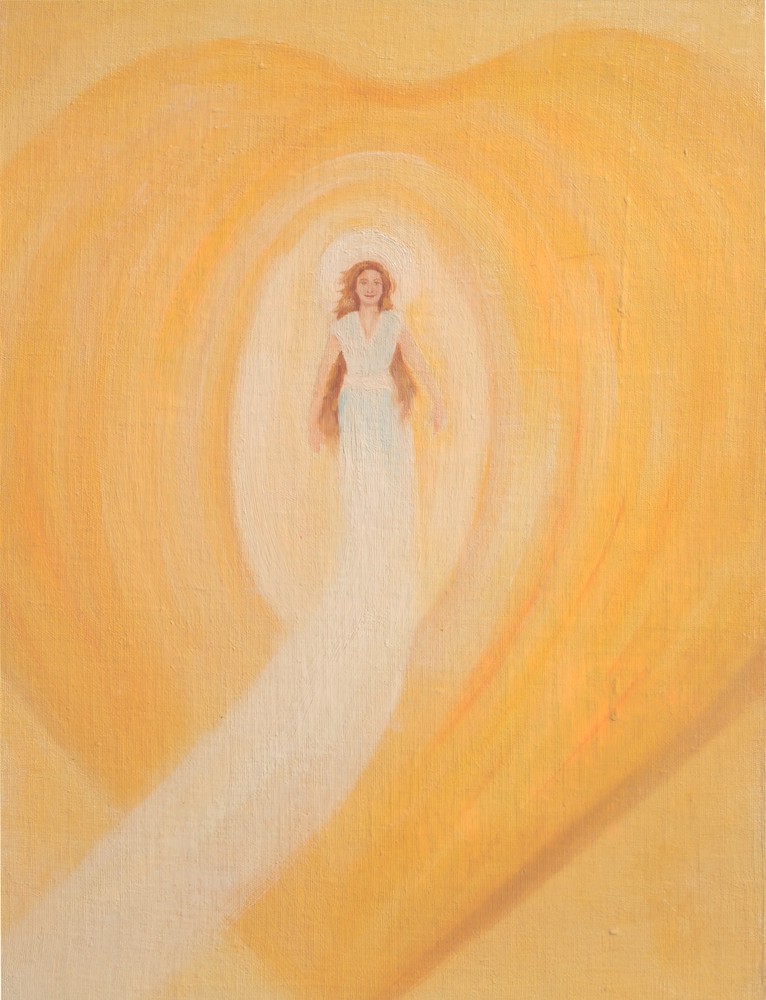
Featured Image: A Painting by Huta
Reference may also be made to the following:


 The Winds of Wonder
Leave a reply to RY Deshpande Cancel reply