Savitri and Yama — Two Paintings: Huta and Nandalal Bose

Savitri and Yama — Two Paintings: Huta and Nandalal Bose

By

/

1–2 minutes

read

Savitri and Yama — Two Paintings

A painting by Huta
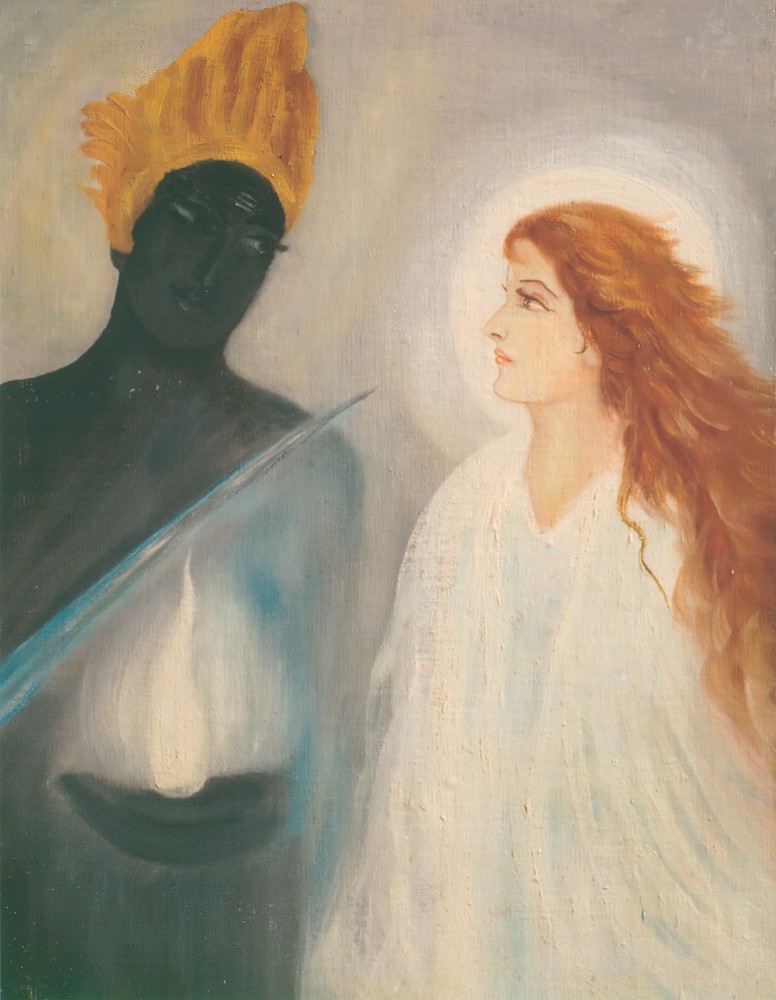
The two opposed each other with their eyes,

Woman and universal god: around her,

Piling their void unbearable loneliness

Upon her mighty uncompanioned soul,

Many inhuman solitudes came close. ||135.13||

Savitri Book 9 Canto 1 – Towards the Black Void

A painting by Nandalal Bose
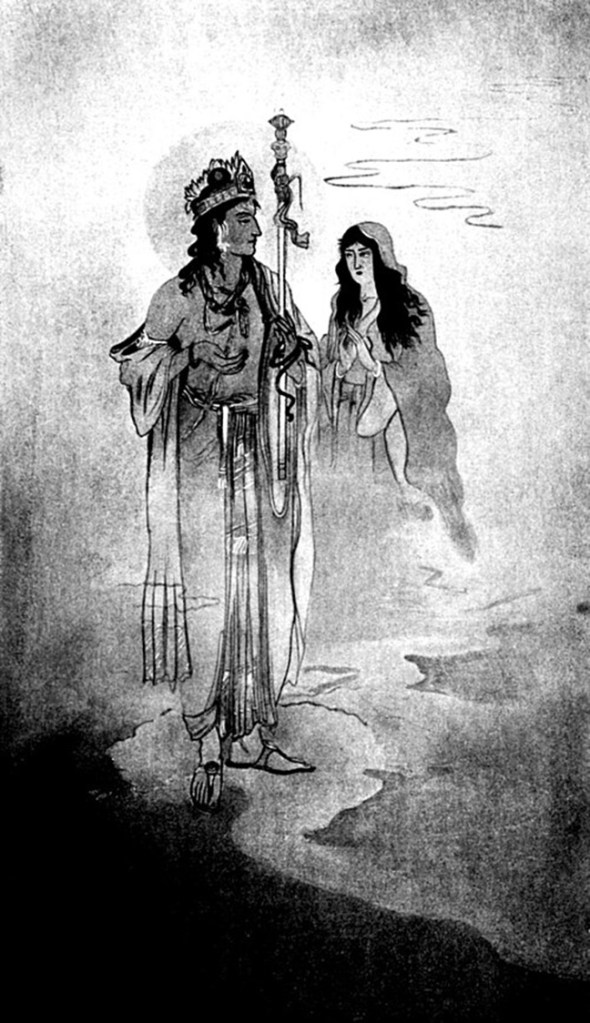
Nandalal Bose (3 December 1882 – 16 April 1966) was one of the pioneers of modern Indian art and a key figure of Contextual Modernism.

A pupil of Abanindranath Tagore, Bose was known for his “Indian style” of painting. He became the principal of Kala BhavanSantiniketan in 1921. He was influenced by the Tagore family and the murals of Ajanta; his classic works include paintings of scenes from Indian mythologies, women, and village life.

Today, many critics consider his paintings among India’s most important modern paintings. 

He was given the work of illustrating the Constitution of India.

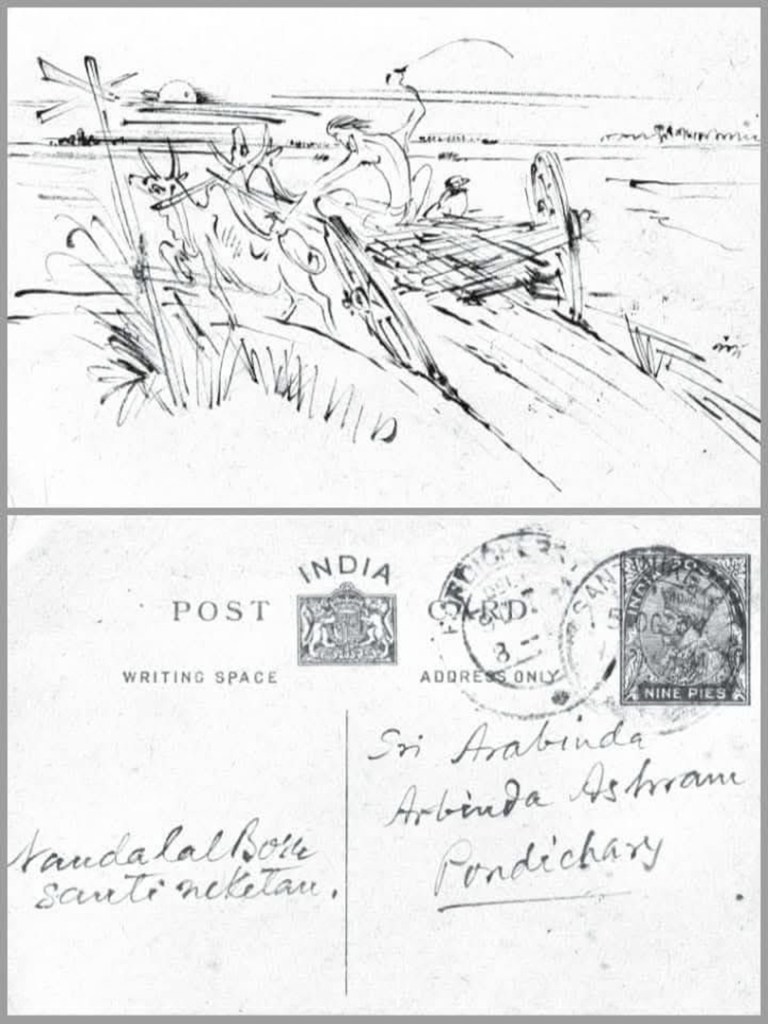
A painting by Nandalal Bose on a post-card
A Note

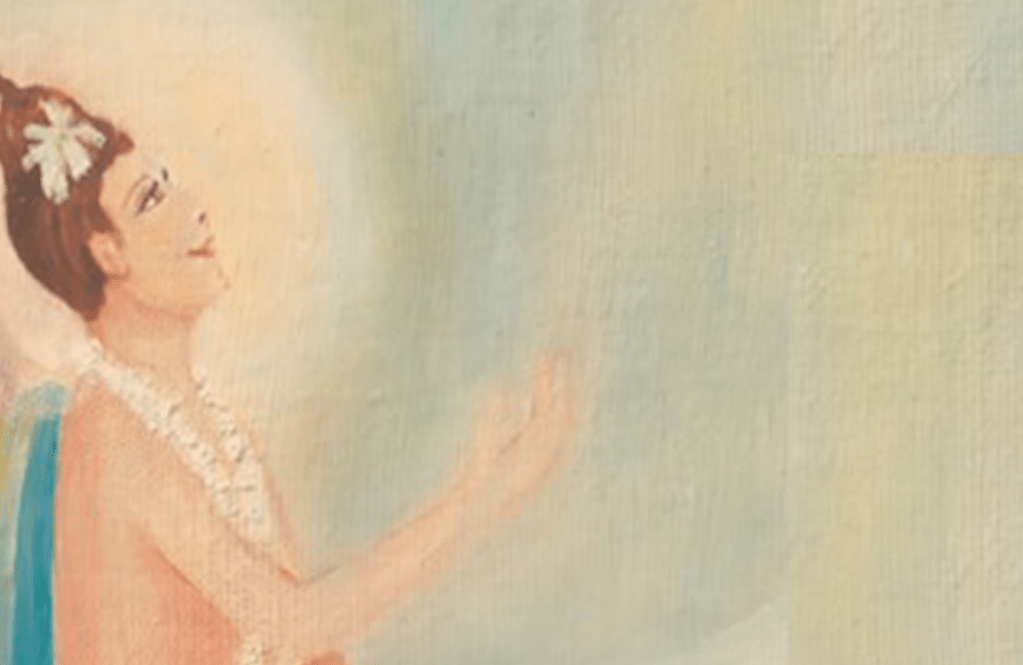
While the art of Nandalal Bose is exquisite, lyrical-æsthetic in its creativity, Huta’s is deeply occult-spiritual plunging into the depths of the spirit. If one epitomises the present the other opens itself to the furure. Sri Aurobindo has shown the way to the Future Art in his example of the Future Poetry. We have future music in Sunil also directly inspired by the Mother. There are glimpses of the future architecture in the Matrimandir at Auroville. And this will have to go everywhere,

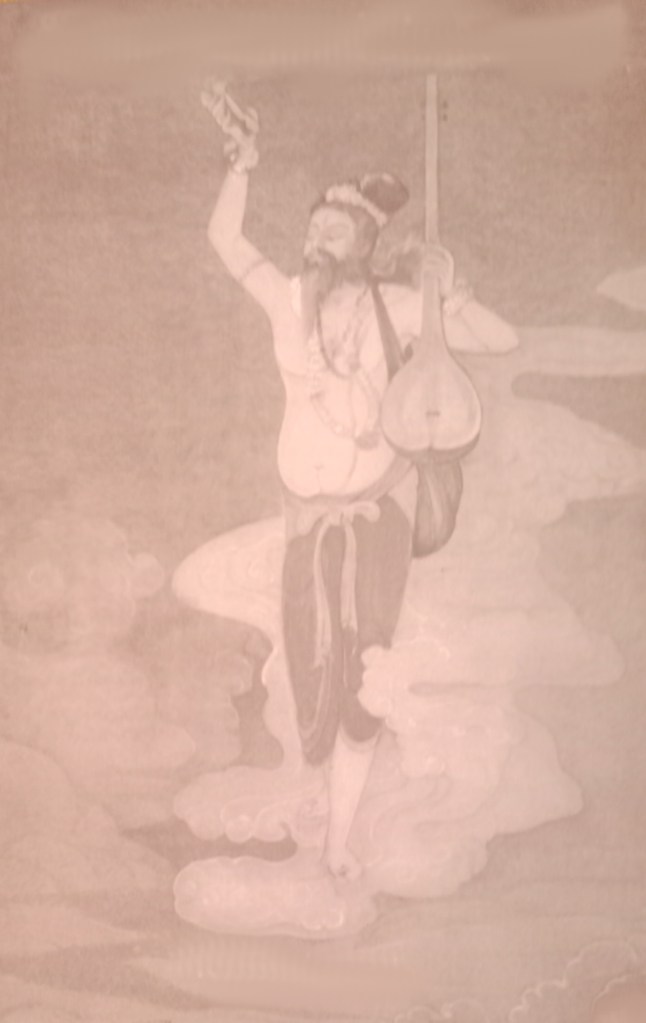
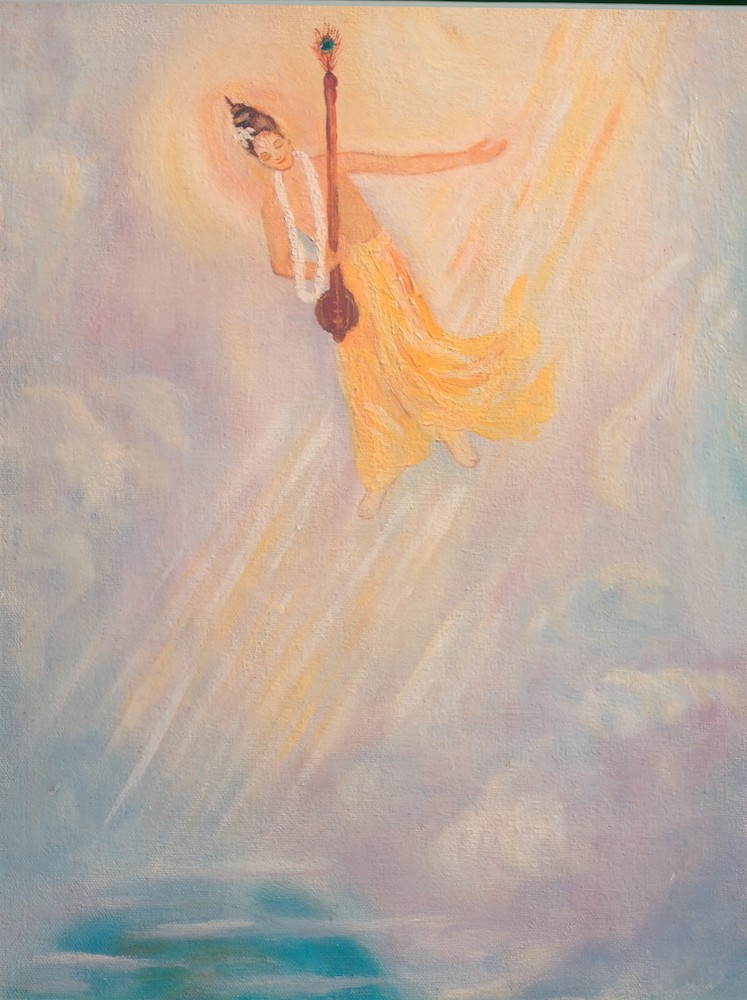
Here are the two Narads, by Huta and by Nandalal:
But see this wonder by Huta:
8 responses to “Savitri and Yama — Two Paintings: Huta and Nandalal Bose”

  1. RY Deshpande Avatar
    RY Deshpande

    Vibhakar Lele writes in an email:

    Many thanks for this introduction to artists! Where would Raja Ravi Varma stand in comparison to each of them?

    As children, whatever paintings we saw and elders approved were by them two – Raja Ravi Varma and Dalal.

    I have a vague memory of having come across the name of Nandlal Basu.

    When I had been in London, I visited famous art museums there, as also when Manjiri had taken me to Paris and Amsterdam, she had shown me two great museums there. 

    I loved to see museums for  their antique articles and various collections..

    RYD answers: Raja Ravi Varma was a genuine artist of the Classical Age, robust, strong, masculine, detached, hardly any trace of emotional involvement as we understand it. But here we are trying to see the possibilities of the future art which has to come from a very high source of Inspiration and Technique, they going together in the ampleness of a vibrant creativity. It is not there and our sophistication cannot bring it on the canvas. A floating sheet of imagination solidly grounded has to be the base for revelation and realisation. The more dynamic will be not this static frozen mode but visualisation in a video combining sight and sound and sense. That could also be a new form of epic with all the orphic wonders coming from the deep soul or from high above the head reaching the solar sky.

    Like

  2. Goutam Ghosal Avatar
    Goutam Ghosal

    Nice to see them again.

    Like

  3. Goutam Ghosal Avatar
    Goutam Ghosal

    Nice to see them again.

    Like

  4. claudechamberland Avatar
    claudechamberland

    Huta’s Narad, descending and carrying the sun, with a vague seeing of earth below, is a pure chef d’oeuvre…The irradiating colours accompanying him are so luminous, almost an experience in itself. We forget the fact that it has to be painted in gross matter! The expression of peace and serenity in the fine features of the wise man’s face is unmatched.

    Like

    1. RY Deshpande Avatar
      RY Deshpande

      That’s beautiful. But what do you say about that video in

      https://thewindsofwonder.org/2026/01/25/the-divine-yajna-celebrating-the-death-of-satyavan/

      I believe the Italian artist is from Auroville.

      I think tomorrow’s presentations will be audio-visuals accompanying the text, a dynamic creativity flowing at once in many directions. What do you say?

      Like

      1. claudechamberland Avatar
        claudechamberland

        En effet, c’est incomparable…unique…je n’ai jamais rien vu de tel! Il faudrait créer une salle de visionnement, dans le Savitri Bhavan ou dans tout autre lieu sacré, pour que l’on puisse se recueillir en visionnant cette merveille. Oui, il s’agit là-aussi d’une oeuvre inspirée qu’on doit voir et revoir, lentement, chez soi, en arrêtant les images lorsque le rythme n’est pas dicté par la lecture de Mère, car parfois, le défilement du texte est un peu trop rapide. Mais certaines images, photos ou jeu de lumière sont tout simplement saisissants et la musique de Sunil donne à l’ensemble une solennité appropriée.

        Liked by 1 person

  5. damahapatra Avatar
    damahapatra

    Now I am challenged again to comment! The same disclaimers apply as to my last comment!

    In these sets of paintings, I like Nandalal Bose’s more than that of Huta-ben’s. Before I explain, I should mention that I am aware of some of the paintings by Bose, and I like his Gandhi linocut!

    With all deep reverence to Huta-ben, I would say Nandalal Bose’s painting looks to me more realistic. Or, rather more Indian-like, and if we accept the veracity of the epic, we all know that the story happened in India.

    In Huta-ben’s painting of Savitri, she is the “golden princess”, the “bright beauty” (to use words from the epic poem), hence her painting of Savitri as a very bright, fair, lady perhaps made better sense to Huta-ben. But it is something to think about whether ‘bright’ or ‘golden’ mean fair in color, with blonde hair, in a symbolic sense. Or, can a lady, who is not fair, be ‘bright’ or ‘golden’ in a spiritual sense? Obviously, as I alluded to in my last comment, I am not questioning the intention of Huta-ben, she is right in her own way. But I would think if the painting of the Savitri, the princess, was not fair and blonde, it could not have, even then, lost its spiritual significance, beauty and brightness.

    Similarly, Yama is painted as pure black by Huta-ben. Yama is the dark god or “dark immensity” – and from that point of view, it makes sense. But I am not sure, if Yama is not that dark, whether the symbolic, spiritual, significance of the painting would be lessened.

    Bose’s painting looked more realistic, more Indian, more traditional, suitable to Deshi taste and style. Savitri as the princess, trained in royal etiquette, is having her saree on her head as a mark of respect to Yama, the elderly and the god – even though he is there to take away her beloved! She is there with full of respect, her hands folded, but in no way that means she is defeated or she is asking for something. She is there with full heroic spirit, ready to face the god of death – in fact that is the summum bonum of the epic!

    This traditional painting of Bose reminded me of going through a description of a picture of Sri Aurobindo and Mrinalini Devi in a well-known book, in which the author noticed that there is no smile or joyfulness in their expression. I knew that the author lacked the inside-knowledge of the Indian tradition. Not smiling in a picture, taken in a photo studio, does not mean the individual, or individuals, are not happy or joyous.

    About the painting of Narad, Huta-ben and Bose displayed their own perceptions of beauty and elegance. In Huta-ben’s painting I could see the descent of the heavenly sage. In the picture one could notice the peacock moon on his veena, and one could clearly see and feel his heavenly grace and charm while descending. But Huta-ben’s Narad has no excess fat on him, it seems his travel around the Lokas kept him slim and fit (not as in typical Indian priestly class where priests are supposed to have big bellies). Narad of Huta-ben is clean shaven, no beard, no moustache, ever young. On the other hand, Bose’s Narad is not young, he has grey hair, beard and moustache. But I like that his hand is raised as he is chanting (Narayana Narayana!). One could see clouds around him as he was descending. Huta-ben’s Narad is bare-footed, no amulet around his arms, while Bose’s Narad has wooden sandals and amulets. Both are beautiful in their own ways.

    These are my two cents!

    On another note, I liked the title – “The Winds of Wonder”!

    Debidatta Aurobinda Mahapatra

    Liked by 1 person

    1. RY Deshpande Avatar
      RY Deshpande

      Your comment is very comprehensive and deserves every attention for it to be appreciated and accepted. In the meanwhile, I would like you to have a look at the original Savitri story we have in the Mahabharata. Please check the following when you have time.

      https://savitri.in/library/sri-aurobindo/vyasas-savitri

      Here is the tradition. But the Indian tradition is to create traditions. I believe Sri Aurobindo and Huta-ben are doing that, the Mother present behind her. While we appreciate the glory in the tradition we at a juncture when things have to leap into the future, not only the Four Powers of the Mother being active but also the higher poised to enter into the terrestrial dynamics, must open ourselves to them.

      This is my immediate response in the nature of appreciative acknowledgment.

      Like

Leave a reply to claudechamberland Cancel reply