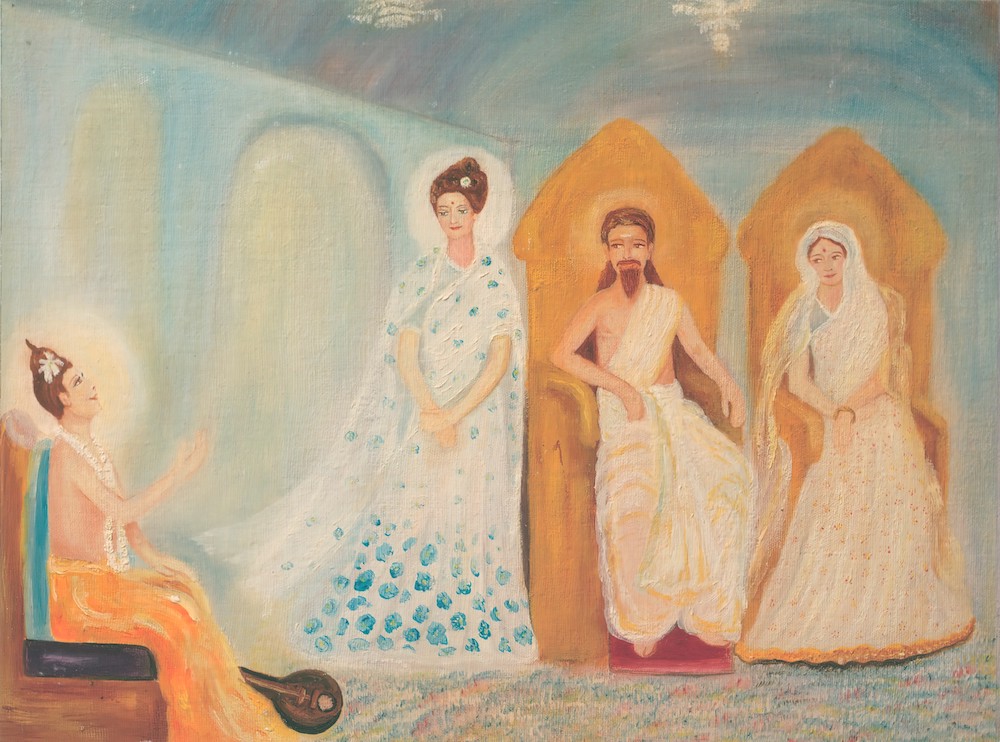
Aswapati introduces Savitri to Narad — A Comment about a Painting by Huta
Princess Savitri has grown up into full maidenhood and is bidden by her revered Yogi-father King Aswapati to find a mate for herself. This was because no warrior-prince of merit and will had come forward to claim her hand in marriage. Immediately she sets herself on the long fateful quest and eventually one excellent morning meets Satyavan in the far Shalwa Woods. They by the awakened power of love at once recognise each other’s ancient identity, of ages, and pledge to be together. With all the happiness in her triumphant heart she returns to the Palace to share her discovery of love with her royal parents.
But in the calm luxurious Palace Hall she already finds her parents in the august company of the heavenly Sage Narad. From his home in Paradise he, crossing the silent bounds bordering the mortal’s plane, has rushed to meet them with a tremendously specific charged purpose, making an extremely significant special visit to them, arriving at the Palace an hour before Savitri’s return. In the meanwhile he sings to the royal hosts the song of the lotus-heart of love with a thousand luminous buds of truth.
And steps in joyous Savitri.
The father introduces his daughter to the visiting Sage:
Behold her, singer with the prescient gaze,
And let thy blessing chant that this fair child
Shall pour the nectar of a sorrowless life
Around her from her lucid heart of love,
Heal with her bliss the tired breast of earth
And cast like a happy snare felicity. ||106.55||
As grows the great and golden bounteous tree
Flowering by Alacananda’s murmuring waves,
Where with enamoured speed the waters run
Lisping and babbling to the splendour of morn
And cling with lyric laughter round the knees
Of heaven’s daughters dripping magic rain
Pearl-bright from moon-gold limbs and cloudy hair,
So are her dawns like jewelled leaves of light. ||106.56||
So casts she her felicity on men. ||106.57||
A flame of radiant happiness she was born,
And surely will that flame set earth alight:
Doom surely will see her pass and say no word,
But too often here the careless Mother leaves
Her chosen in the envious hands of Fate:
The harp of God falls mute, its call to bliss
Discouraged fails mid earth’s unhappy sounds;
The strings of the siren Ecstasy cry not here
Or sooner silenced in the human heart. ||106.58||
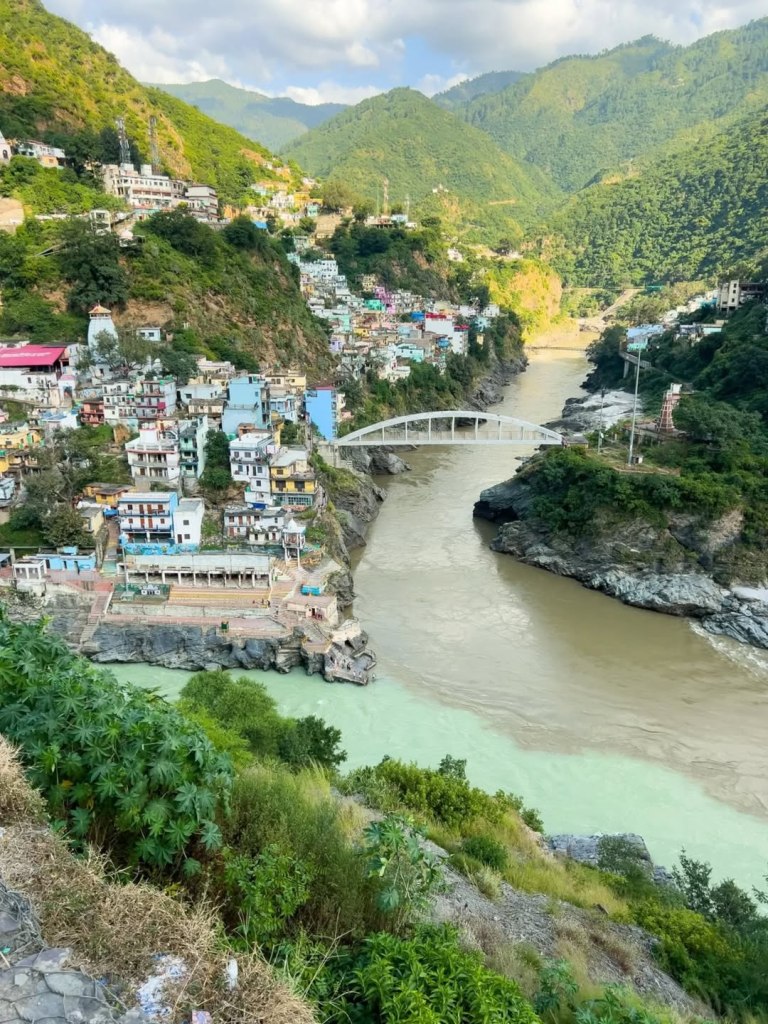
The reference to the speeding enthusiastic Alacananda River with murmuring waves could be taken as a pregnant suggestion for all the hurrying eagerness that is present not only in the King’s Palace in Madra located on its banks but also meaningfully to the entire yearning creation. The River joins Mandakini the Ganges in the lower Himalayas at Devaprayāga.
Let us scan that sentence:
As grows| the great| and gold|+en boun|+te+ous tree|
Flow+er+ing| by A+la|ca+nan+|da’s mur|+mur+ing waves,|
Where with| e+na+|moured speed| the wa+|ters run|
Lisp+ing| and bab|+bling to| the splen+dour| of morn|
And cling| with lyr|+ic laugh|+ter round| the knees|
Of heav|+en’s daugh|+ters drip|+ping mag|+ic rain|
Pearl-bright| from moon|-gold limbs| and cloud|+y hair,|
So are| her dawns| like jew|+elled leaves| of light.| 106.56
The second line opens with dactyl-amphibrach, ending with an ænapest, carrying the murmur of love over long distances where death stands transformatively defeated. The “great and golden bounteous tree” is life itself getting ready for the riches to make it truly and greatly rich in deathlessness. The “envious hands of Fate” are a decisive part of that secret dreadfulness which must be met with and their workings in the present “mortal life” undone.
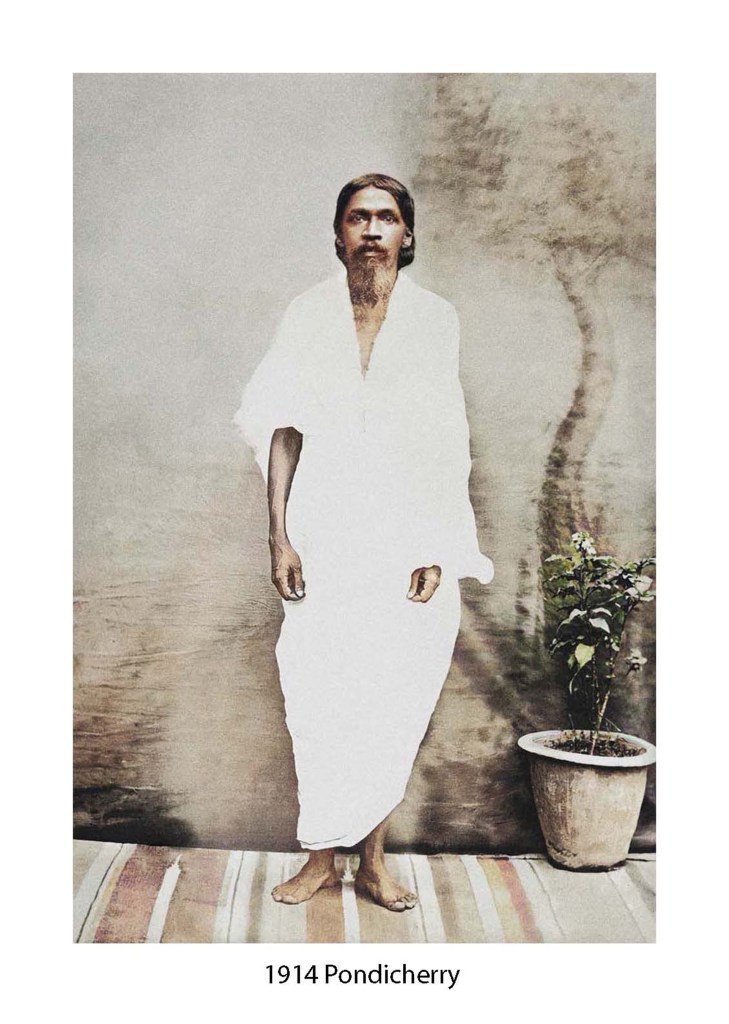
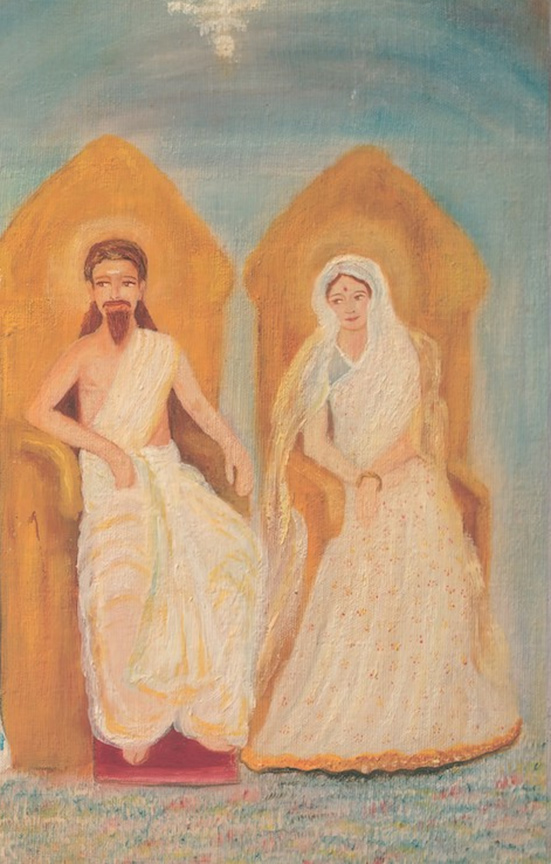
The featured image at the beginning is a wonderful painting by Huta, Book Six Canto One, # 5, very inspired. It is reminiscent of the Photo of Sri Aurobindo taken in 1914 in the Guest House, 41 Rue François Martin Pondicherry. But in the context of the “vast business of created things” these two, we may say with some trepidation, do not quite go together:
The eternal seeker in the aeonic field
Besieged by the intolerant press of hours
Again was strong for great swift-footed deeds. ||92.12||
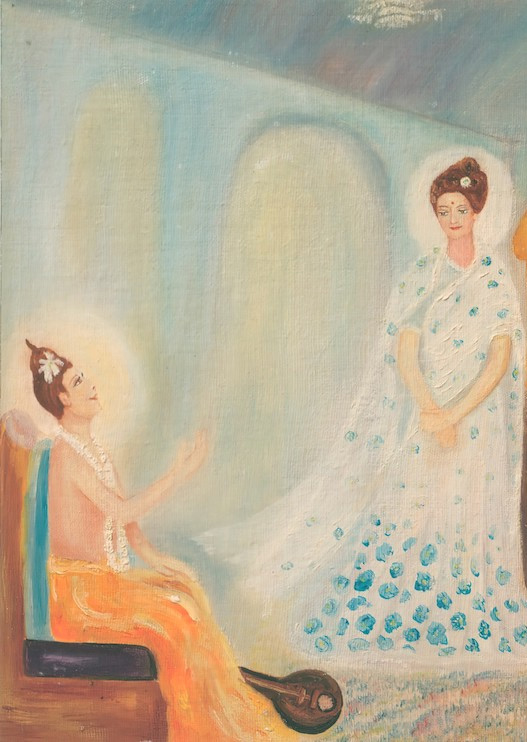
This bust of the busy Aswapati in a dhoti with one end around the shoulders does not have that suggestion of “intolerant press of hours and of the great swift-footed deeds”. It is so not only here but also at a few more subsequent places. Nor does the dress of the Queen go with it. The text has a different atmosphere. But we have most appealing pictures of Narad and Savitri. En passant we may also say that the paintings of Satyavan going to the forest just in jeans, his torso bare, for his hectic work, or when he is dead under the majestic “kingly tree” seem to be out of tune with the classical ambiance of the marvellous Epic, Vyasa’s as well as Sri Aurobindo’s, somewhat unrelated and incongruent.
Can we say that this was approved by the Mother? No doubt, the entire inspiration for the painter comes from her, she at times making sketches herself; but nowhere we have such a Satyavan sketched by the Mother. The Mother has given full freedom to the painter to be prompted by her æsthetic discernment and sensitivity; she would not intervene in it. Sorry Huta-ben if this comment of mine is going to appear not only hasty or perceptive but also atrocious. Satyavan or this Aswapati or the Queen take us a bit away from Savitri of the Master-Creator with a luminous command and restraint.
Sri Aurobindo in 1914
Madra on the Banks of Alacananda, modern Devaprayāga
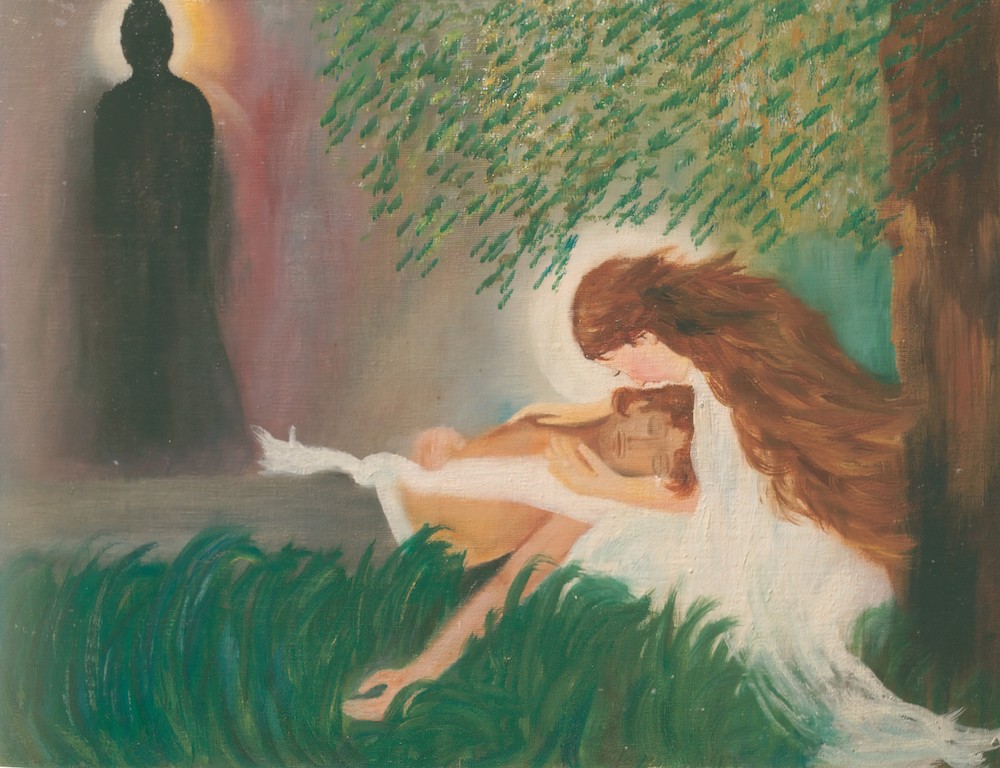
Apropos of the death of Satyavan Huta has done two paintings, the first related to the last line of the Symbol Dawn Book One Canto One and the second the death in the Forest Book Eight. There is a very perceptive difference between the two. I like and prefer the Symbol Dawn painting which has a deep spiritual-occult luminosity and suggestiveness, that Death has certainly been conquered, the entire impetus and momentum of the Epic.
The Symbol Dawn
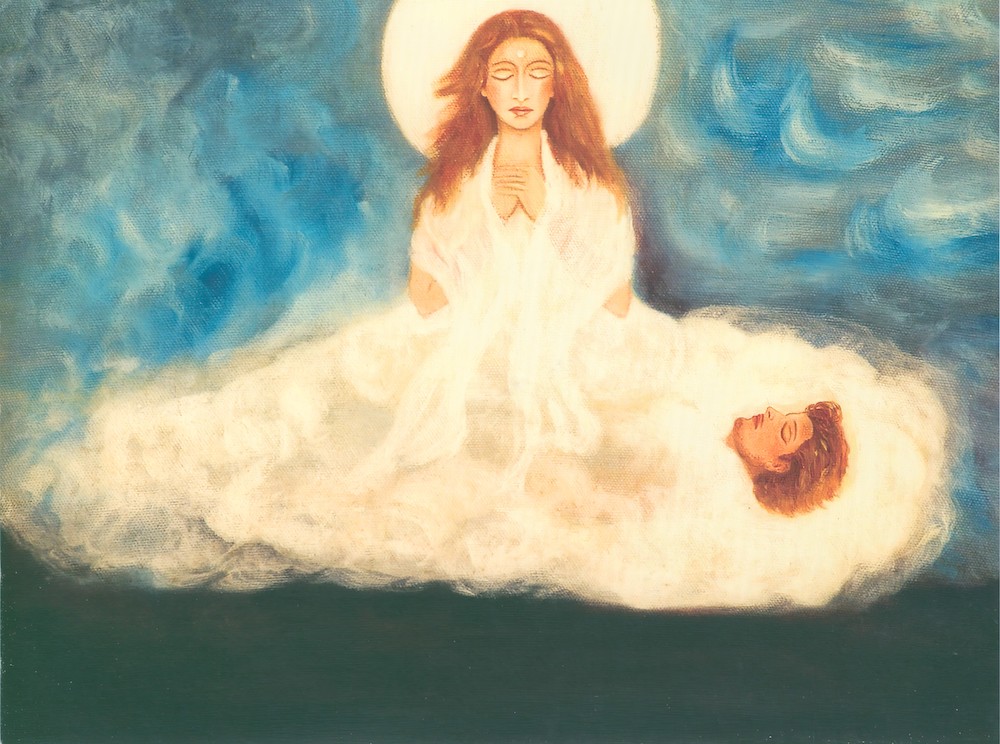
Death in the Forest
Here are the Royal Parents
And here is Narad casting his gaze on Savitri
In response to some of the comments I am going back to the 1907 photo of Sri Aurobindo which is a better representation for the painting than the 1914-photo. Here is a dynamic Yogi in the thick of actions, busy with created things to change them to their trueness, than the other who is a seeker Yogi to bring down the divine Power to this creation, that the possibility of this life becoming the life divine gets realised, is accomplished. Remember also that after getting the divine Boon the Yogi has to engage himself in a sex act, so that the Boon gets fructified; that is the business of created things. It must find recognition in the artist’s illustration.
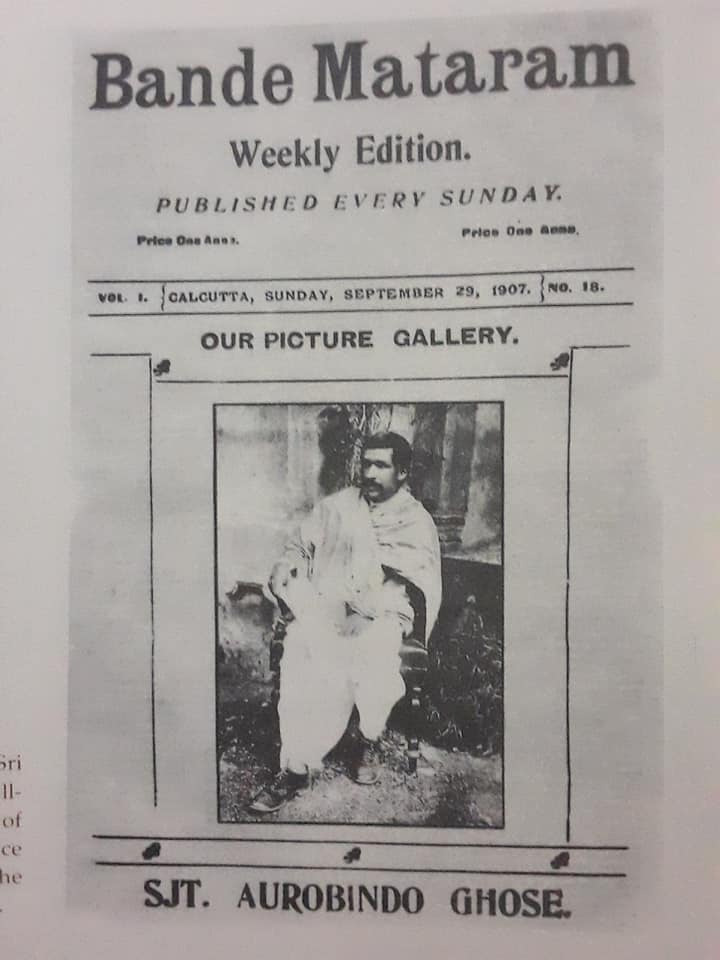
Or else suitably this
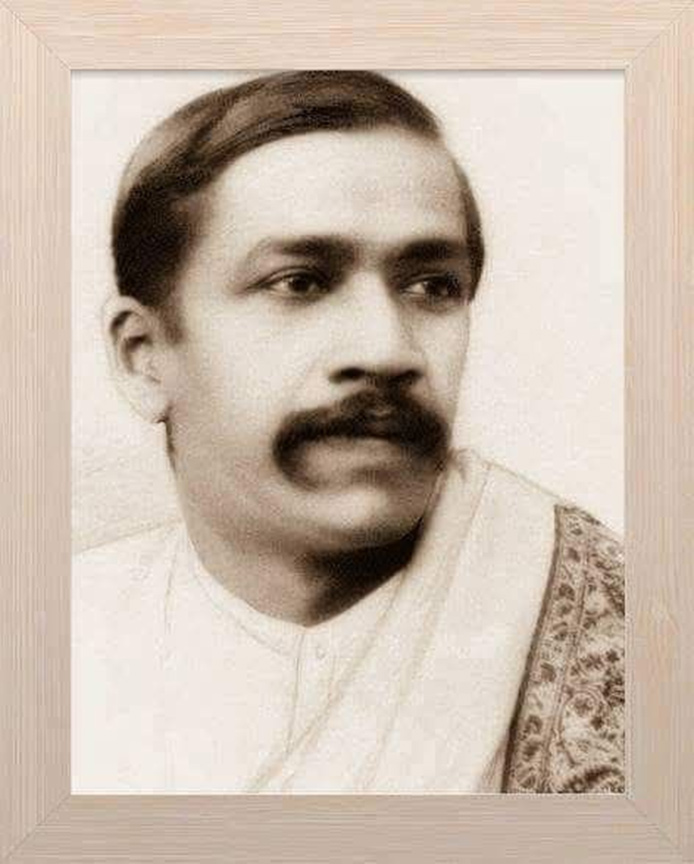
Yet we are looking for the realised Yogi in action in a different way, the unknown undisclosed futuristic, busy with the divine manifestation.


 The Winds of Wonder
Leave a reply to RY Deshpande Cancel reply