Peintures Himalaya par Marc

Peintures Himalaya par Marc

By

/

1–2 minutes

read

Peintures Himalaya par Marc

Marc D from Auroville writes:

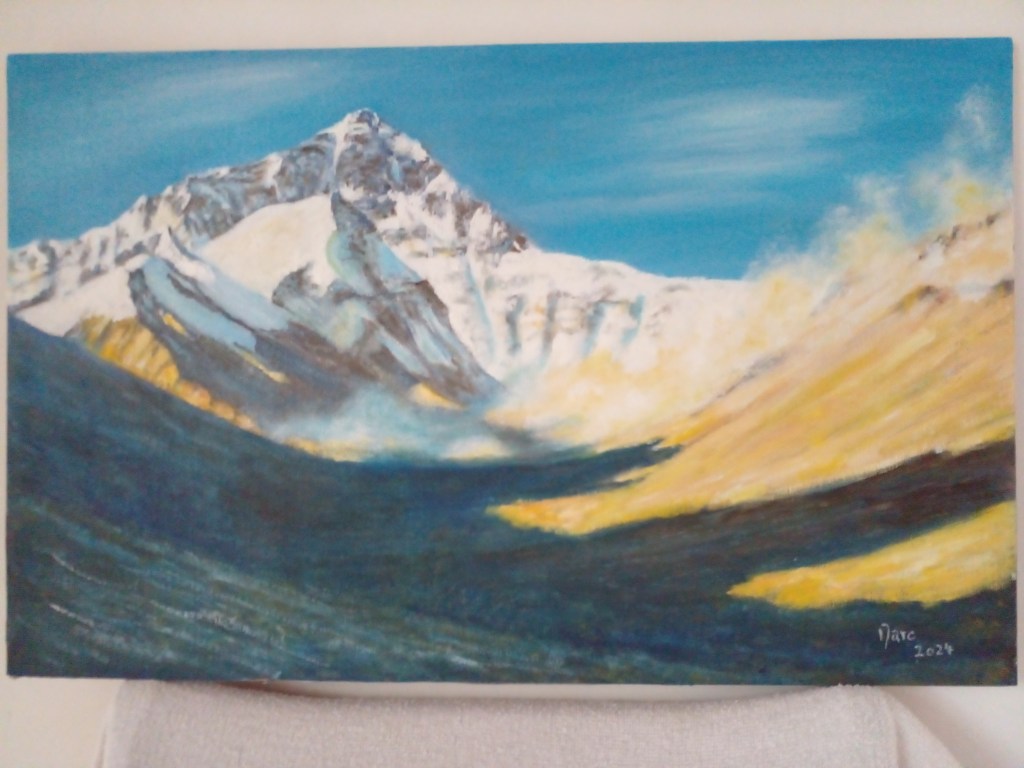
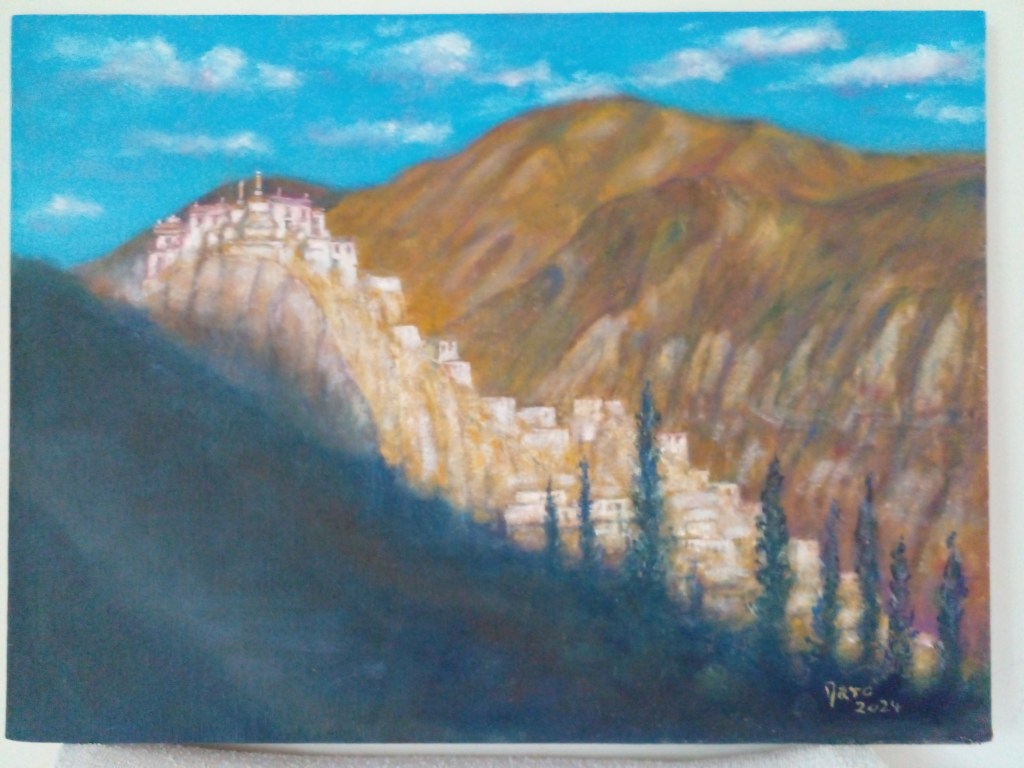
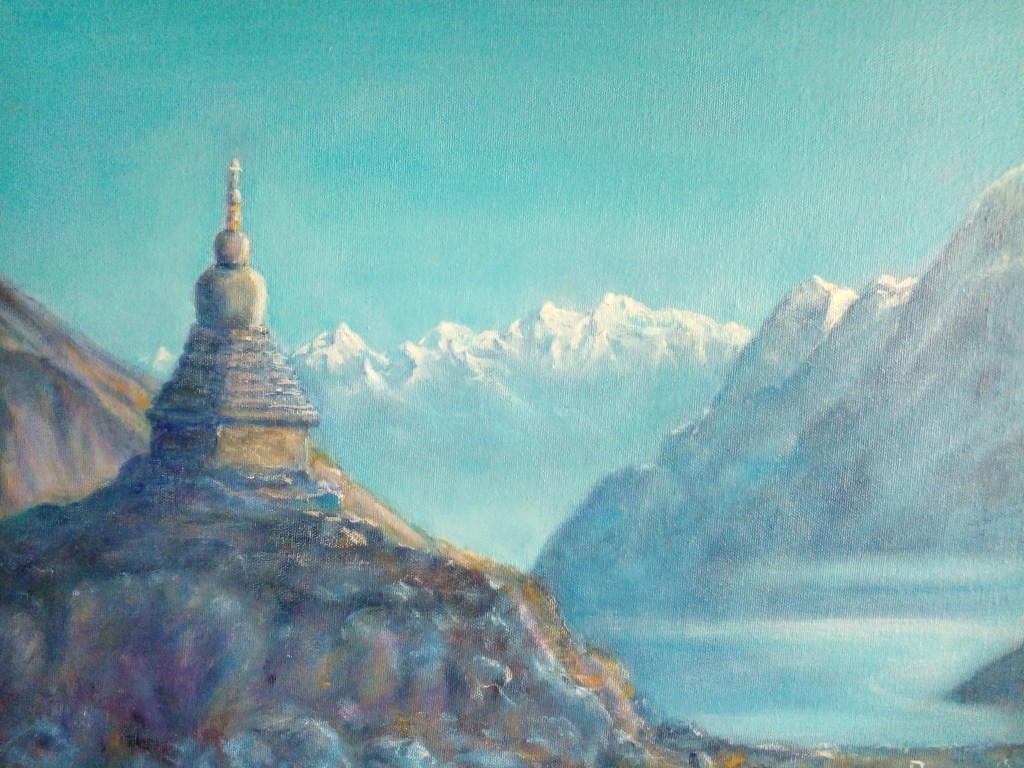
A few of my last oil paintings for Christmas. Photo quality is not very good, originals are more refined and contrasted.

Joyeux Noel!

My attempt was to try touching Himalaya’s Spirit, that I have been deeply feeling within for some times, through light, colours, mystery, majesty…  Chomolungma (Everest), Kanchenjunga, Machapuchare, Kailash, Annapurna, Nanda Devi, all very sacred places…. of course some Buddhists or Shivahist places are met during the journey.

Attached are a few paintings.

Here is a very fine comment sent by a friend from France. This is exactly the feeling I have when painting… “Cher Marc, Il y a quelque chose d’indéfinissable dans ces peintures qui fait que l’âme regarde et contemple quelque chose d’elle même comme dans un miroir. Et cela lui donne du bonheur.” Patrice

Paintings by Marc

Last painting redone:
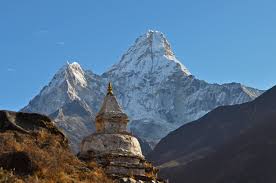
Two Photographs
Transfigured Death

13 responses to “Peintures Himalaya par Marc”

  1. RY Deshpande Avatar
    RY Deshpande

    RYD: This is apropos of Image 4 in the set of the paintings in the text.

    I understand that to some extent. But I don’t like those eyes at all. Bringing religion into art so explicitly causes more damage to art than really does add any value to art. I would like those eyes to be taken off for the stupa to occultly see everything with the invisible eyes.  If this is going to be against the tradition, so much the better for it. I need not be bound by only looking from any particular angle. But this may be my view…

    Marc D: My attempt was to try touching Himalaya’s Spirit, … But you are right, I will remove the eyes….

    [This is what we have in Image 5; the other two photos are illustrative of the tradition.]

    Like

  2. RY Deshpande Avatar
    RY Deshpande

    The comment says: “Bringing religion into art so explicitly causes more damage to art than really does add any value to art.” This needs a more extensive study in the perception and appreciation of Art. In that sense as a quick or hurried remark, one may even say that even the best of the Renaissance Art, Painting-Sculpture-Architecture, turn out to be more illustrative than creative in the spirit of Art which is in the joy of creation itself, the expression of beauty and harmony and the breathing rhythm of form, that even through form can the formless become visible; in it the Unimaginable or the Unimagined looks vivid and sensible in images. Something is seized in the absolute delight of a discovery which lay hidden or secret in the Wondrous, the Adbhuta.

    Like

  3. RY Deshpande Avatar
    RY Deshpande

    There has to be apprehension of form more than its comprehension, more of what the form is telling us than we trying to get it.

    Like

    1. RY Deshpande Avatar
      RY Deshpande

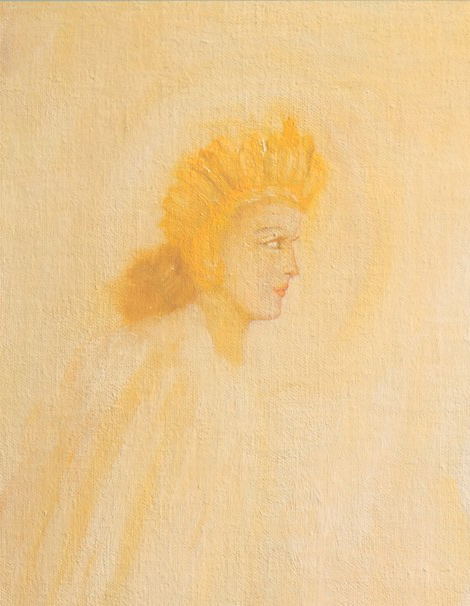
      I have added a painting of Transfigured Death done by Huta, Savitri Book Eleven. The full image shows him and Savitri looking into each other. He alone is extracted from this. The beauty and significance of the art is, it is he who is telling actually who he is; the artist is not to trying to comprehend and present him.

      The text is

      He seemed the wideness of a boundless sky,
      He seemed the passion of a sorrowless earth,
      He seemed the burning of a world-wide sun. ||149.34||
      Two looked upon each other, Soul saw Soul. ||149.35||

      Liked by 1 person

  4. RY Deshpande Avatar
    RY Deshpande

    Bob Zwicker writes: Truly beautiful. Stupa better without eyes.

    Like

  5. RY Deshpande Avatar
    RY Deshpande

    Rima Ghosh writes:

    Marc employs light in a way reminiscent of Impressionist masters, such as Claude Monet and Camille Pissarro, who sought to capture the fleeting qualities of sunlight.

    Marc’s art embodies a unique style of spiritual impressionism, blending the fleeting beauty of light and colour with the grandeur of natural landscapes. His works draw from Impressionism through their vibrant hues and atmospheric effects, while grounding the viewer in Realist depictions of form and perspective. Infused with Romantic awe, his paintings evoke the sublime majesty of the Himalayas, inviting a contemplative engagement with their sacred essence.

    His paintings merge the still majesty of the Himalayas with the dynamism of light, shadow, and mist, evolving as a metaphor for life—where the balance between stillness and motion creates a rare, beautiful juxtaposition. Few have captured the essence of existence so poignantly on canvas.

    Like

  6. RY Deshpande Avatar
    RY Deshpande

    Akash Deshpande writes:

    The one with the river seems to be the best but the trishuls make it a bit too particular.

    I will suggest to Marc to take away those obtrusive trishuls.

    Like

  7. RY Deshpande Avatar
    RY Deshpande

    Dear Desphande, thank you for sharing, here is may comment.

    Sorry but I was unable to post it. Something escapes me…

    Thank you for these remarkable comments and appreciations. I can see my own feeling reflected in some others, perhaps also an intention of these paintings… But Painting the Himalaya was imperative, without any intention at all… I wished to touch the Great Spirit of Himalaya, its incredible splendour and power and majesty. During the journey I came to meet Lord Siva, Lord Buddha, who are entirely part of Himalaya’s soul. The painting with the river evoke a passage for the pilgrims, a corridor placed by Nature, leading to Lord Shiva’s abode… the allusion to the spiritual past, still very present there, is a part of the expression that I respect and enjoy a lot while painting, although rare in numbers amongst other paintings (15 today). Now some people give beautiful comments, also it is a question of exhibition in spite of the original total absence of intention.

    Marc

    Like

  8. Rima Ghosh Avatar
    Rima Ghosh

    Regarding religious emblems, Marc did mention his impressions of Shaiva and Buddhist temples in the Himalayas. However, what Deshpande ji suggested, I believe, would reveal an evolved artist—a seer—in the creator’s next paintings, free from any imposing identity, allowing them to discover and reflect the vision behind these emblems. This approach would elevate these pieces to a greater form of art, incorporating the discovery of the elements of adbhuta. The possibilities are infinite.

    These tridents, however, remind me of the trident held by Mother Durga in Savitri, symbolising the Divine sovereignty and luminescence in the cosmos:

    The triumvirate of wisdom, love and bliss

    And the sole autocracy of the absolute Light.

    Liked by 1 person

    1. RY Deshpande Avatar
      RY Deshpande

      From Marc

      Yes, Rima speaks like a true professional art critic, I really appreciate her accurate comments.

      Sorry but I cannot answer directly…

      Liked by 1 person

  9. maachild16 Avatar
    maachild16

    Delighted to see the beautiful paintings of Himalayan mountains. It reminds me of a trekking expedition I undertook 37 years back to Annapurna Base Camp. The trek was indeed very tough. However, the snowy beauty, as I realised then, was something divinely beautiful. One just forgets everything in the midst of spectrum created by sunrays falling on the uneven snowy surface. It gave me an altogether different feeling when at least for quite sometime I couldn’t even recall from where had I come.

    Thanks again for the wonderful paintings.

    Indrajit Goswami, Guwahati

    Liked by 1 person

  10. RY Deshpande Avatar
    RY Deshpande

    Dear Deshpande,

    Well, I am not really in the mood of “thinking” about these paintings. Indeed (to me) Himalaya evokes Sri Aurobindo’s splendour, Light, greatness, immensity…. They came simply imperatively, as I already said. I just try to manifest what I feel within and this happened spontaneously through the Himalaya splendid and grandiose symbolic support.

    Rina beautifully wrote “His paintings evoke the sublime majesty of the Himalayas, inviting a contemplative engagement with their sacred essence”, truly a real compliment which says exactly my feeling. I am also glad about Indrajit’s very delicate reminiscences and appreciation. It seems this painting are not for myself only….

    I would not discuss the opportunity of including or not some religious elements when they are part of the landscape. I already answered about it. Better not to think too much  and give it too much importance. Claude Monet painted many times the same façade of Rouen’s cathedral, simply as an art and light exploration.

    About Rima other comment “However, what Deshpande ji suggested, I believe, would reveal an evolved artist—a seer—in the creator’s next paintings, free from any imposing identity, allowing them to discover and reflect the vision behind these emblems”, I would say, I think, that my paintings published by the Savitri Foundation as “Savitri paintings” some years ago enter in that category of “free from any imposing identity”. “Himalaya” is only a different phase.  

    Marc 

    PS, I added a few more paintings. You may recognise Kanchenjunga range and Shiva’s abode Machapuchare. (These will be published separately. — RYD)

    Like

  11. RY Deshpande Avatar
    RY Deshpande

    Marc adds:

    Dear Deshpande,

    I would like to add a few words about Indrajit’s very sensitive comment “One just forgets everything in the midst of spectrum created by sunrays falling on the uneven snowy surface. It gave me an altogether different feeling when at least for quite some time I couldn’t even recall from where had I come.” This sounds as an authentic yogic or spiritual experience, provided by the splendid and powerful surroundings, but also, perhaps, or probably, by the profound very ancient spiritual atmosphere of the place.

    Marc

    Like

Leave a reply to Rima Ghosh Cancel reply