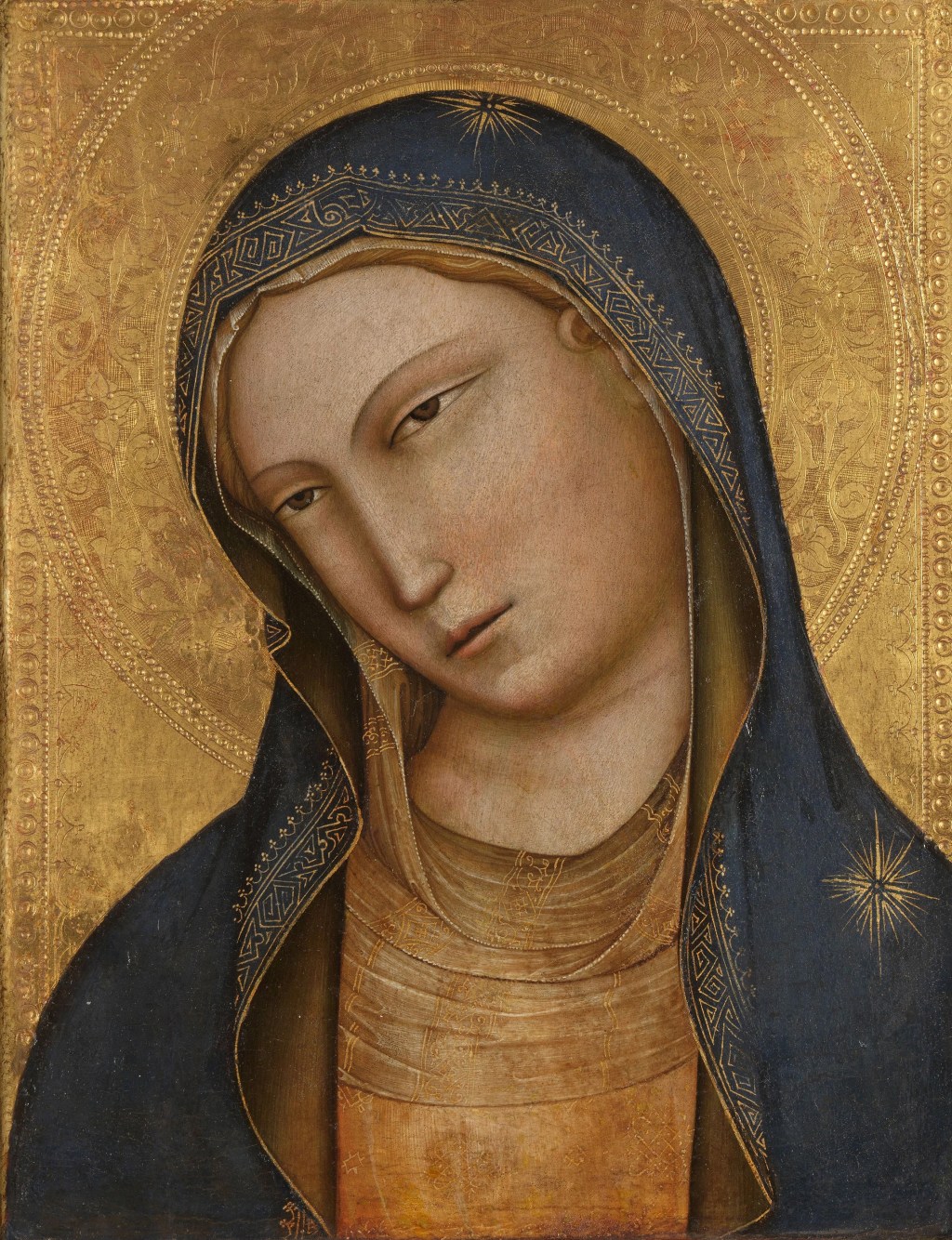
The Three Madonnas in the Yoga of Savitri
This post is prompted by an email from Dr Ananda Reddy, his query dated 23 February 2026:
Dear Deshpande ji,
How are you now. Haven’t seen you since many days in the Ashram. I need to clarify some things something in Savitri. I request you to shed some light on this issue.
In Book VII Canto 4 of Savitri we come across the triple soul forces. What’s your interpretation of the three Madonnas?
1. Are they the soul forces of Savitri or the Divine Mother?
2.What is the meaning of soul-Forces? Does the soul have separate sources ? Is it not a divine force in itself?
3. Are the Madonnas, Goddesses created by the Supreme Mother in the involutionary process?
4. Are these Madonnas created at the Overmental level?
5. What does Savitri mean by “I shall return?” Return after getting back Satyavan? Or after attaining Supermind in Her own sadhana?
I have read many different interpretations from different scholars but none are satisfactory in the end. So I thought of approaching you for these enigmatic Soul Forces concept in Savitri.
Can you spare some time?
Thanks
Ananda Reddy
Director, SACAR
Puducherry
Here is the first general response to some of the above.
There is something unique in The Triple Soul-Forces, Canto Four Book Seven, The Book of Yoga of Savitri. It is related more to the inner-occult than to the higher spiritual. This, we may say, belongs more to the Tantra than to the Ādhyātma. Savitri’s Yoga is Neo-Tāntric, profoundly Occult, as against the Yoga of Aswapati which is through and through Neo-Vedāntic-Ādhyātmic, Spiritual, with inner siddhis or realisations climbing the ladder of consciousness. In the deep and vast scriptural treatises there is hardly anything of her Yoga. We have this triple aspect of Savitri’s soul, but correspondingly nothing in the case of Aswapati where we have at once the swift beginning with the static Oneness and dynamic Power, they the integral Godhead’s seals descending in him. In the case of Sri Aurobindo, he had the experience of static Oneness around 1 January 1908 in Baroda; the second of dynamic Power was a few months later in Alipore Jail where he was incarcerated for one year for his nationalist activities.
Most of our confusion between the two arises due to the traditional mind seeing everything only as spiritual and not occult. This should be immediately resolved.
Let us first see the Savitri-text.
The first Madonna of divine pity is in a pale lustrous robe, seeing far from the “inner mind”. She bears seven sorrows with seven stabs piercing her bleeding heart. This is the description of Sabat Mater, Mater Dolorosa. She proclaims: “O Savitri, I am that secret soul.” She has the hope that one day her God will come. There is the opposition. But here is Savitri’s assurance:
“Madonna of suffering, Mother of grief divine,
Thou art a portion of my soul put forth
To bear the unbearable sorrow of the world. ||122.39||
Because thou art, men yield not to their doom,
But ask for happiness and strive with fate;
Because thou art, the wretched still can hope. ||122.40||
But thine is the power to solace, not to save. ||122.41||
One day I will return, a bringer of strength,
And make thee drink from the Eternal’s cup;
His streams of force shall triumph in thy limbs
And Wisdom’s calm control thy passionate heart. ||122.42||
Thy love shall be the bond of human kind,
Compassion the bright king of Nature’s acts:
Misery shall pass abolished from the earth;
The world shall be freed from the anger of the Beast,
From the cruelty of the Titan and his pain. ||122.43||
The second Madonna is with gold and purple sheen, sitting on lion’s back with trident and thunderbolt. This Mother of Might is in the “inner world of Mind”. She also says that she has come from the secret soul of Savitri. But from the “lower human world” rises the dwarf-Titan’s voice. He claims to conquer earth and with that heaven also, gods his menial folk. And Savitri:
“Madonna of might, Mother of works and force,
Thou art a portion of my soul put forth
To help mankind and help the travail of Time. ||123.55||
Because thou art in him, man hopes and dares;
Because thou art, men’s souls can climb the heavens
And walk like Gods in the presence of the Supreme. ||123.56||
But without wisdom power is like a wind,
It can breathe upon the heights and kiss the sky,
It cannot build the extreme eternal things. ||123.57||
Thou hast given men strength, wisdom thou couldst not give. ||123.58||
One day I will return, a bringer of light,
Then I will give to thee the mirror of God;
Thou shalt see self and world as by him they are seen
Reflected in the bright pool of thy soul. ||123.59||
Thy wisdom shall be vast as vast thy power. ||123.60||
Then hate shall dwell no more in human hearts,
And fear and weakness shall desert men’s lives,
The cry of the ego shall be hushed within,
Its lion roar that claims the world as food,
All shall be might and bliss and happy force.” ||123.61||
The third Madonna is a woman of “clear and crystal light”, she too the secret soul of Savitri. Her immediate task is to heal the wounded desolate earth, show to her figures of bright Gods, build consciousness out of the Inconscient, lift slowly man’s soul nearer the Light. Eventually even the body shall bear the immense descent of God. But then there is the arrogant proud Reasoner declaring that he shall find the secrets of God. Savitri turns to her being of light:
“Madonna of light, Mother of joy and peace,
Thou art a portion of my self put forth
To raise the spirit to its forgotten heights
And wake the soul by touches of the heavens. ||124.67||
Because thou art, the soul draws near to God;
Because thou art, love grows in spite of hate
And knowledge walks unslain in the pit of Night. ||124.68||
But not by showering heaven’s golden rain
Upon the intellect’s hard and rocky soil
Can the tree of Paradise flower on earthly ground
And the Bird of Paradise sit upon life’s boughs
And the winds of Paradise visit mortal air. ||124.69||
Even if thou rain down intuition’s rays,
The mind of man will think it earth’s own gleam,
His spirit by spiritual ego sink,
Or his soul dream shut in sainthood’s brilliant cell
Where only a bright shadow of God can come:
His hunger for the eternal thou must nurse
And fill his yearning heart with heaven’s fire
And bring God down into his body and life. ||124.70||
One day I shall return, His hands in mine
And thou shalt see the face of the Absolute. ||124.71||
Then shall the holy marriage be achieved,
Then shall the divine family be born. ||124.72||
There shall be light and peace in all the worlds.” ||124.73||
Are these three the only soul-forces of Savitri? But they are the ones who have stood out prominently, “a few bright forms emerging from the unknown depths”; there are several other forms which have not been disclosed, left unnamed. In the Inner Country Savitri was told:
O human copy and disguise of God
Who seekst the deity thou keepest hid
And livest by the Truth thou hast not known,
Follow the world’s winding highway to its source. ||121.11||
There in the silence few have ever reached,
Thou shalt see the Fire burning on the bare stone
And the deep cavern of thy secret soul.” ||121.12||
Then Savitri following the great winding road
Came where it dwindled into a narrow path
Trod only by rare wounded pilgrim-feet. ||121.13||
A few bright forms emerged from unknown depths
And looked at her with calm immortal eyes. ||121.14||
There was no sound to break the brooding hush;
One felt the silent nearness of the soul. ||121.15||
A “few bright forms” takes us to the following from Sri Aurobindo’s little Masterpiece the Neo-Tāntric The Mother. After describing the Four Powers, the four great Aspects of the Mother, — Maheshwari, Mahakali, Mahalakshmi, Mahasaraswati — he tells that
There are other great Personalities of the Divine Mother, but they were more difficult to bring down and have not stood out in front with so much prominence in the evolution of the earth-spirit. There are among them Presences indispensable for the supramental realisation,—most of all one who is her Personality of that mysterious and powerful ecstasy and Ananda which flows from a supreme divine Love, the Ananda that alone can heal the gulf between the highest heights of the supramental spirit and the lowest abysses of Matter, the Ananda that holds the key of a wonderful divinest Life and even now supports from its secrecies the work of all the other Powers of the universe.
The significant phrase is “they were more difficult to bring down”. But then who had brought them down, these four powers? Clearly the reference is to the Purusha Sūkta of the Rig Veda.
The Vedic Purusha Sūkta is a Hymn of Sacrifice of the Divine Being. When it talks of the four parts of that Being, of Virāt Purusha, we then at once see that Maheshwari is his head, Mahakali his arms, Mahalakshmi the heart, and Mahasaraswati the feet. In the fourfold order of the society we have a correspondence of Maheshwari as the Brahmin, Mahakali the Kshatriya, Mahalakshmi the Vaishya, and Mahasaraswati the Shudra. When this is coming from the Teacher of the Gita himself it means it is stating the working of a fundamental Law of Truth in the World Order. The Author speaks of he himself being the creator of this fourfold division of society, cāturvrņyam mayā sŗştam, based on each quality or swabhāva of the individual. This is the purport of the Sanātana Dharma expounded by Sri Aurobindo at Uttarpārā.
This fourfold order as a cosmic activity got initiated in the performance of the Vedic Purusha Yajña. It is said that Brahma remained inactive “because of not knowing” and he was advised, as we have in the Sākalya Brāhmana, to perform a Sarvāhuta Yajña. “From your sacrificed body you shall create bodies for all living creatures.”
It is interesting to note how Sri Aurobindo looks at Chaturvarna from the point of view of a Vaishnava experience. Vishnu as the Sustainer of the Creation has four forms: Mahavira, Balarama, Pradyumna, Aniruddha. Mahavira is the Brahmin possessing Knowledge and Light and Awareness; Balarama embodies Kshatriya quality of Force and Dynamism; Pradyumna the Vaishya is one who expresses the quality of Love and Beauty; Aniruddha is Shudra with competent service, and with the quality of organisation and execution in details.
Vivekananda brings out the yogic aspect of the Chaturvarna. Jnana Yoga, Raja Yoga, Bhakti Yoga, and Karma Yoga are the methods available for the realisation of the corresponding types or qualities or the soul’s casts playing roles in this present mode of universal manifestation.
It must also be understood that one cannot be complete without the other three, for instance, Jnana finds its fullness when it is also accompanied by Raja and Bhakti and Karma.
Deeply steeped as we are in this strong Vedantic tradition it might perhaps be natural and justifiable to link up this with the triple soul-forces Savitri is meeting in her inward journey to find her soul. There may be some kind of correspondence between the two; but fundamentally they are very different in character and nature. Much of the misunderstanding and confusion arise due to mixing them up. Because here they are specific to Savitri as a part of the real Tantra Yoga, with all the occult contents in it, we do not find them present in the Yoga of Aswapati which is wholly spiritual-ādhyātmic.
About the sacrifice of the Supreme Being in the Purusha Sūkta Sri Aurobindo writes: “This is the great sacrifice called sometimes the sacrifice of the Purusha, but much more deeply the holocaust of Prakriti, the sacrifice of the Divine Mother.” [The Mother]
We must therefore see the fourfold forces of the soul as aspects of the Divine Mother present in our soul, of the Gita parā prakṛtir jīvabhūtā, the aṁśaḥ sanātanaḥ, my supreme nature which has become the individual soul, “the Parā Prakrti has become the Jīva”. Aṃsha (part) and Sanātana (eternal) Souls are considered part of the Divine’s superior energy, often struggling in the material world but inherently divine.
But the beauty is, the Tantra and the Adhyātma have to be necessarily understood as fulfilling each other. The traditional dichotomy which has ambiguously crept in has been removed in the most revealing way by Sri Aurobindo. In extensive chapters dealing with the Yoga of Self-Perfection in The Synthesis of Yoga we have the most lucid and authoritative revelation.
The force at work in us is the manifest divine Shakti, the supreme or the universal Force unveiled in the liberated individual being, parā prakṛtir jīvabhūtā, who will be the doer of all the action and the power of this divine life, kartā. It is this Shakti with the Ishwara in her or behind her whose divine presence and way we have to call into all our being and life. Man is then sattwic, rajasic or tamasic or a mixture of these qualities and his temperament is only a sort of subtler soul-colour which has been given to the major prominent operation of these fixed modes of his nature. The Godhead, the spirit manifested in Nature appears in a sea of infinite quality, Ananta-guna. But the executive or mechanical Prakriti is of the threefold Guna, Sattwa, Rajas, Tamas, and the Ananta-guna, the spiritual play of infinite quality, modifies itself in this mechanical nature into the type of these three gunas. And in the soul-force in man this Godhead in Nature represents itself as a fourfold effective Power, caturvyūha, a Power for knowledge, a Power for strength, a Power for mutuality and active and productive relation and interchange, a Power for works and labour and service, and its presence casts all human life into a nexus and inner and outer operation of these four things. And yet when the soul develops, it is in this Swabhava and Dharma of work and service that there are found some of the most necessary and beautiful elements of our greatest perfection and the key to much of the secret of the highest spiritual evolution. None of these four types of personality can be complete even in its own field if it does not bring into it something of the other qualities.
To reach perfection we have to become aware of the divine Shakti, draw her to us and call her in to fill the whole system and take up the charge of all our activities. She will take up the mental energy, her own lower formation, and raise it to its highest and purest and fullest powers of intelligence and will and psychic action. She will change the mechanical energies of the mind, life and body which now govern us into delight-filled manifestations of her own living and conscious power and presence. She will manifest in us and relate to each other all the various spiritual experiences of which the mind is capable. And as the crown of this process she will bring down the supramental light into the mental levels, change the stuff of mind into the stuff of supermind, transform all the lower energies into energies of her supramental nature and raise us into our being of gnosis. The Shakti will reveal herself as the power of the Purushottama, and it is the Ishwara who will manifest himself in his force of supermind and spirit and be the master of our being, action, life and Yoga.
Nature of the divine Shakti is the timeless power of the Divine which manifests itself in time as a universal force creating, constituting, maintaining and directing all the movements and workings of the universe. This supramental Shakti may form itself as a spiritualised intuitive light and power in the mind itself, and that is a great but still a mentally limited spiritual action. Or it may transform altogether the mind and raise the whole being to the supramental level. The first necessity of the Yoga is to lose the ego of the doer and merge it in the sense and vision of the universal Shakti originating, shaping, turning to its ends the action of ourselves and others and of all the persons and forces of the world.
And this is from The Essays on the Gita:
The infinite divine Shakti is present everywhere and secretly supports the lower formulation, parā prakṛtir me yayā dhāryate jagat, [The Gita 7.5] but it holds itself back, hidden in the heart of each natural existence, sarvabhūtānāṁ hṛddeśe, until the veil of Yogamaya is [18.61] rent by the light of knowledge. The spiritual being of man, the Jiva, possesses the divine Nature. He is a manifestation of God in that Nature, parā prakṛtir jīva-bhūtā, and he has latent in him [7.5] all the divine energies and qualities, the light, the force, the power of being of the Godhead. But in this inferior Prakriti in which we live, the Jiva follows the principle of selection and finite determination, and there whatever nexus of energy, whatever quality or spiritual principle he brings into birth with him or brings forward as the seed of his self-expression, becomes an operative portion of his Swabhava, his law of self-becoming, and determines his swadharma, his law of action.
This should give us a fairly good ground to answer Ananda Reddy’s queries.
- Are they the soul forces of Savitri or the Divine Mother?
They are the forces of the Divine Mother operating in the soul of Savitri.
2.What is the meaning of soul-Forces? Does the soul have separate sources ? Is it not a divine force in itself?
It is the divine force working in the inner counties of the individual. Operations of the
soul forces belong to Prakriti.
- Are the Madonnas, Goddesses created by the Supreme Mother in the involutionary process?
They are her creations.
- Are these Madonnas created at the Overmental level?
They are universal forces coming from the Overmind.
- What does Savitri mean by “I shall return?” Return after getting back Satyavan? Or after attaining Supermind in Her own sadhana?
Savitri saw the harsh conflict between the Madonnas and the corresponding hostile beings. To the working of the soul-forces in the inner mind the response had come as “warped echoes”, to the higher working the challenging reply from the lower places. Savitri’s assurances are to the Madonnas. As long as Death is present Falsehood will always be there and these hostiles springing up from the Abyss will continue to exist. Only when Death has been vanquished, that is Falsehood dissolved, can the soul-forces work in their dynamic authenticity.
And Savitri heard the voice, the warped answer heard
And turning to her being of light she spoke:
“Madonna of light, Mother of joy and peace,
Thou art a portion of my self put forth
To raise the spirit to its forgotten heights
And wake the soul by touches of the heavens. ||124.67||
Because thou art, the soul draws near to God;
Because thou art, love grows in spite of hate
And knowledge walks unslain in the pit of Night. ||124.68||
But not by showering heaven’s golden rain
Upon the intellect’s hard and rocky soil
Can the tree of Paradise flower on earthly ground
And the Bird of Paradise sit upon life’s boughs
And the winds of Paradise visit mortal air. ||124.69||
Even if thou rain down intuition’s rays,
The mind of man will think it earth’s own gleam,
His spirit by spiritual ego sink,
Or his soul dream shut in sainthood’s brilliant cell
Where only a bright shadow of God can come:
His hunger for the eternal thou must nurse
And fill his yearning heart with heaven’s fire
And bring God down into his body and life. ||124.70||
One day I shall return, His hands in mine
And thou shalt see the face of the Absolute. ||124.71||
Then shall the holy marriage be achieved,
Then shall the divine family be born. ||124.72||
There shall be light and peace in all the worlds.” ||124.73||
After the Conquest of Death will there be the “holy marriage” of Satyavan and Savitri, then shall the divine family be born. That will be the beginning of light and peace in all the worlds.
In the overall context we may raise the Query: In the Book of Yoga of Savitri, Book Seven Canto Four, are present the Madonnas, the soul-forces of Savitri. Why are these identified as Christian Madonnas and not as Indian Shaktis?
The response could be: The identification of the soul-forces in Book Seven, Canto Four of Savitri as “Madonnas” rather than “Shaktis” reflects Sri Aurobindo’s nuanced approach to spiritual symbolism and his integration of diverse cultural and spiritual traditions. Here are key points explaining this choice:
- Cultural and Symbolic Resonance of “Madonna”:
- The Italian term “Madonna”, My Lady, carries connotations of the divine motherhood, compassion, and nurturing, deeply rooted in Christian tradition. By using this term, Sri Aurobindo emphasises the maternal and compassionate aspects of these soul-forces, aligning them with universal archetypes of divine care and love [1 | Vol-34] [2 | Vol-34] .
- Universal Spiritual Archetypes:
- Sri Aurobindo often sought to transcend specific cultural frameworks, aiming for universal spiritual archetypes. While “Shakti” is a term from Indian spiritual tradition denoting dynamic energy and power, “Madonna” evokes a broader, universally accessible image of divine feminine qualities, making the soul-forces relatable across different spiritual and cultural contexts [3 | Vol-34] [4 | Vol-34] .
- Distinctive Qualities of the Soul-Forces:
- Each Madonna embodies specific aspects of the soul’s expression—light, might, suffering, and peace. These qualities are described in ways that resonate with the nurturing and protective roles traditionally associated with the Madonna figure, rather than the more dynamic and forceful connotations of Shakti [5 | Vol-34] [6 | Vol-34] [7 | Vol-34] .
- Integration of East and West:
- Sri Aurobindo’s use of “Madonna” reflects his broader philosophical synthesis of Eastern and Western spiritual traditions. By choosing this term, he bridges the gap between the Indian concept of Shakti and the Western archetype of the Madonna, creating a universal spiritual language [8 | Vol-34] [9 | Vol-34] .
- Focus on the Soul’s Inner Journey:
- The Madonnas are portrayed as emanations of Savitri’s own soul, guiding her inward journey and embodying her spiritual essence. This inward focus aligns with the nurturing and maternal symbolism of the Madonna, emphasizing the soul’s intimate connection with divine qualities [10 | Vol-34] [11 | Vol-34] .
In conclusion, the choice of “Madonna” over “Shakti” reflects Sri Aurobindo’s intention to present the soul-forces as universal embodiments of divine feminine qualities, accessible and resonant across cultural and spiritual boundaries. This terminology underscores the nurturing, compassionate, and maternal aspects of these forces, aligning them with the archetype of the divine mother [12 | Vol-34] [13 | Vol-34] [14 | Vol-34] .
For several nuances of the theme please also refer to the following post containing a good number of insightful comments:
Throughout Christian history, few figures have inspired as much love and devotion as the Madonna — the Blessed Virgin Mary, Mother of Jesus. Depicted in art, venerated in prayer, and honoured in feast days, the Madonna holds a unique place in the heart of the Church. For Catholics, Mary is not only the Mother of God but also our Mother, interceding for us before her Son. Her presence in Christian life has often been called miraculous, as countless believers throughout history testify to her guidance, comfort, and protection. “Miraculous Madonna” refers to the countless ways Mary has shown her maternal care through miracles and apparitions. [Internet]
At this point we may pose two questions.
What is the single great victory of the Ādhyātmic-Spiritual Yoga of Aswpati?
It is to compel the mortal birth of Divine Mother, she “passing through the portals of the birth that id death”. Aswapati’s soul is released from Ignorance and his spirit free from the bondage of nature. That is the inner work he has first done. Then he approaches the Divine Mother to incarnate herself, that “the huge foreboding mind of Night standing across the path of the divine Event” is removed. That can happen only when Death the embodied Shadow is dissolved, is vanquished, he getting transfigured as the Supreme Himself ready to grant boons to wonderful Savitri who by cutting a door in the Void had entered into the Transcendent.
What is the single great victory of the Tāntric-Occult Yoga of Savitri?
She is to find her soul, recover her hid self, seek God’s meaning in her depths and harbour the Divine Force to conquer Death. She has done it. As she is coming back with the soul of Satyavan after getting the Divine Boon also follow in her descent Krishna and Kali. In it the “holy marriage” will be sanctified and the divine race begin to appear. This earthly life shall become the life divine. This is the Agenda of the New Creation in the dynamics of the Spirit.
Observations/comments/reflections from the experts in the field, particularly specialists in Savitri, will add to the profundity of discernment of the original text. The subject is vast and inexhaustible. Under the “blue sky”, as the Mother says, there is nothing that is not in it.
My thanks are due to Ananda Reddy for egging me on, into the difficult and risky hazardous subject. The response is with hesitancy and trepidation. In any case, here it is.
 The Winds of Wonder
Leave a comment