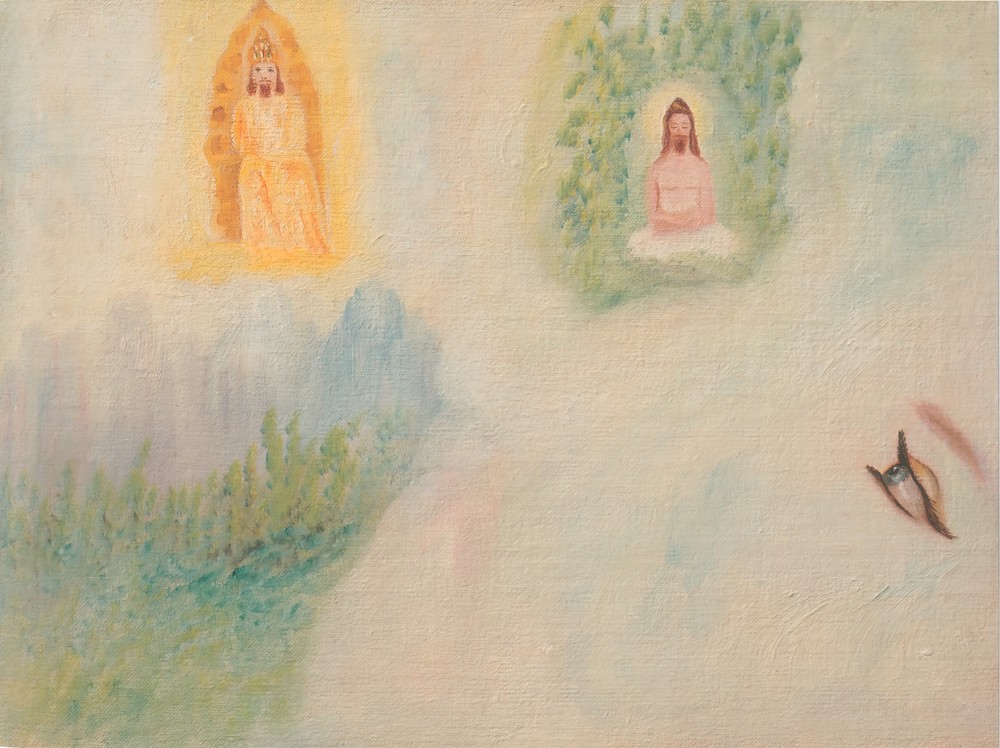
Satyavan introduces himself to Savitri
This is a planned chance meeting between youthful Satyavan and Savitri in the solitary but beautiful and tranquil Shalwa Forest. Savitri was bidden by her Yogi-Father to find a life-partner herself as none had dared approach her to claim her hand in marriage. That day in the morning Satyavan had taken an unaccustomed route to go for his work. They come across each other, eyes meet eyes and the alchemy starts working. She asks him why is his dwelling in the pathless wood, the haunt of anchorites.
And Satyavan replied to Savitri:
“In days when yet his sight looked clear on life,
King Dyumathsena once, the Shalwa, reigned
Through all the tract which from behind these tops
Passing its days of emerald delight
In trusting converse with the traveller winds
Turns, looking back towards the southern heavens
And leans its flank upon the musing hills. ||103.24||
But equal fate removed her covering hand,
A living night enclosed the strong man’s paths,
Heaven’s brilliant gods recalled their careless gifts,
Took from blank eyes their glad and helping ray
And led the uncertain goddess from his side. ||103.25||
Outcast from empire of the outer light,
Lost to the comradeship of seeing men,
He sojourns in two solitudes, within
And in the solemn rustle of the woods. ||103.26||
Son of that king, I, Satyavan, have lived
Contented, for not yet of thee aware,
In my high peopled loneliness of spirit
And this huge vital murmur kin to me,
Nursed by the vastness, pupil of solitude. ||103.27||
Great Nature came to her recovered child;
I reigned in a kingdom of a nobler kind
Than men can build upon dull Matter’s soil;
I met the frankness of the primal earth,
I enjoyed the intimacy of infant God. ||103.28||
A query is about the line “But equal fate removed her covering hand”.
Who is this “uncertain” goddess? Shraddhavan wrote that she is the “good fortune”, but then, why “uncertain”? — Marc Desplanque
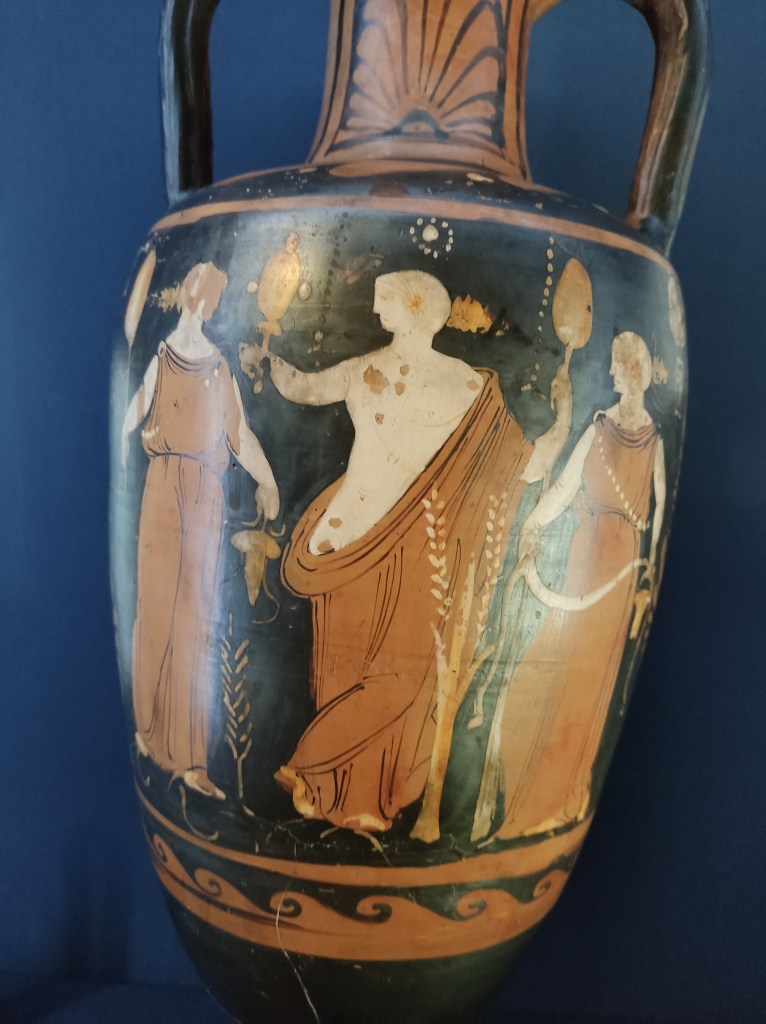
We could look at it as follows: The sentence begins with “equal fate”. We could therefore consider her as the goddess governing destinies making things and fortunes of life changeable or uncertain, uncertain with equal or passionless disposition or concern. If we have to identify her with a Greek Goddess she would be the Allotter, Lachesis, the Disposer of Lots.
In Greek mythology, Lachesis (the “Allotter” or drawer of lots) is one of the three Moirai (Fates) who governs human life by measuring the thread of destiny spun by her sister, Clotho. While Clotho begins life and Atropos ends it, Lachesis determines the span and nature of a person’s life, including the portion of good and evil they will experience.
Wikipedia
Here are specific examples and ways Lachesis governed life:
- Measuring the Lifespan (The Rod): Lachesis is typically depicted holding a measuring rod or staff, which she uses to measure the thread of life. This action defines exactly how long a mortal will live.
- Assigning Destiny (The Lots): Her name comes from the Greek word lanchano, meaning “to obtain by lot”. She determines the “allotted” portion of life, deciding the,,events, fortune, and misfortune a person will face.
- Post-Birth Visitation: Ancient Greeks believed the Fates visited a household three days after a child was born to decide its fate. Lachesis, in this scenario, would determine the trajectory of the child’s life.
- Reincarnation and Choices (Plato’s Republic): In Plato’s Republic, Lachesis is described as the daughter of Necessity. She instructs souls preparing for reincarnation, assigning them lots and presenting them with the varied lives (both human and animal) from which they may choose.
- The Story of Meleager: In the myth of Meleager, Lachesis (along with her sisters) visited the mother, Althaea, to declare the child’s fate: he would live only until a specific log burning in the hearth was consumed.
- The Myth of Admetus: Lachesis and her sisters, influenced by Apollo (who got them drunk), agreed to allow King Admetus to escape his death—the only time the Fates’ decision was successfully challenged, albeit with a strict condition that a substitute be found.
- Symbolism in Art: In art, Lachesis is often depicted as a mature woman pointing to a globe or, in Goya’s painting The Fates, looking through a lens to measure the thread of life.
Lachesis governed the “middle” part of existence, ensuring that the thread created at birth was measured out according to the predetermined span, regardless of a person’s status, as even gods often had to submit to their decisions.
The featured image is a painting by Huta
Savitri Book 5 Canto 3 – Satyavan and Savitri
And Satyavan replied to Savitri:
In days when yet his sight looked clear on life,
King Dyumatsena once, the Shalwa, reigned… ||103.24||
Heaven’s brilliant gods recalled their careless gifts,
Took from blank eyes their glad and helping ray… ||103.25||
He sojourns in two solitudes, within
And in the solemn rustle of the woods. ||103.26|
Son of that king, I, Satyavan, have lived
Contented, for not yet of thee aware,
In my high peopled loneliness of spirit…. ||103.27||
Image of three Moiræ of Greek Mythology sent by Justyn Jędraszewski: Past-Present-Future
 The Winds of Wonder
Leave a comment