About Sri Aurobindo’s Poetry
His poetry strikes a note of affirmation and hope, hope of ‘divine life’ on earth. He has realised that the note of negation has always hindered human progress. Whenever we move towards a luminous ideal it clouds our vision and saps our resolution by the depressing murmur—’the mud is constant, and the stars are out of reach’. Both his theory of poetry and poetic creation is a constant counterblast to the word of despair and strikes an optimistic note. He is assured that his spiritual vision will be actualised and given a material shape on earth:
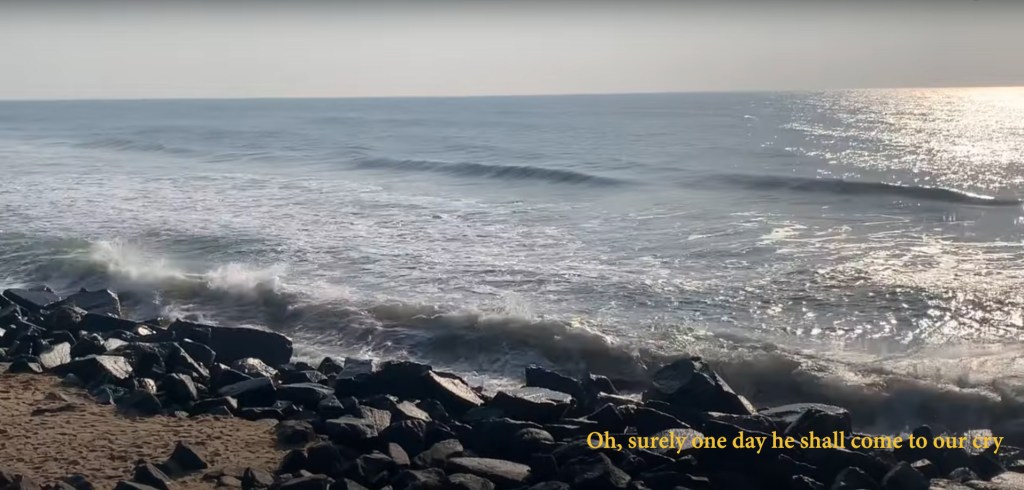
Oh, surely one day he shall come to our cry,
One day he shall create our life anew
And utter the magic formula of peace
And bring perfection to the scheme of things. ||54.43||
One day he shall descend to life and earth,
Leaving the secrecy of the eternal doors,
Into a world that cries to him for help,
And bring the truth that sets the spirit free,
The joy that is the baptism of the soul,
The strength that is the outstretched arm of Love. ||54.44||
One day he shall lift his beauty’s dreadful veil,
Impose delight on the world’s beating heart
And bare his secret body of light and bliss. ||54.45||
Sri Aurobindo’s Savitri is not just a “note of affirmation and hope, hope of ‘divine life’ on earth”. He willed it. “The supramental change is a thing decreed and inevitable in the evolution of the earth-consciousness…” He decreed it and asserted it in 1926. In order that it does happen began his intense yoga-tapasyā. And here it is:
29 February—29 March 1956
Lord, Thou hast willed, and I execute:
A new light breaks upon the earth,
A new world is born.
The things that were promised are fulfilled.
But in fairness to the author it may be said that his is a work meant not for mystic or spiritual but for the academic audience.
Let us scan a few lines of this passage:
One day| he shall| de+scend| to life| and earth,|
Leav+ing| the se+|cre+cy of| the e+ter|+nal doors,|
In+to| a world| that cries| to him| for help,|
And bring| the truth| that sets| the spir|+it free,|
The joy| that is| the bap|+tism of| the soul,|
The strength| that is| the out|+stretched arm| of Love.| 54.44
One day| he shall lift| his beau|+ty’s dread|+ful veil,|
Im+pose| de+light| on the| world’s beat|+ing heart|
And bare| his se|+cret bod|+y of light| and bliss.| 54.45
Second foot in the second line could be an iamb with a tribrach following it; or it can be amphibrach followed by a pyrrhic. The latter is certainly more natural or conventional though it sounds a bit jerky. Though tribrach is unusual but here the smooth flow is more pleasing.
The featured image is Pondicherry Beach
 The Winds of Wonder
Leave a comment