
On the Bank of the River
नदीच्या किनाऱ्यावर
दिसे मला खरे स्वप्न नदीच्या किनाऱ्यावर,
वाहत येई पूर्वेकडून सकाळी सकाळी;
हातात होते उमललेले फूल गुलाबाचे,
स्मित जसे काही फुलली भावना ह्रदयाची;
येती पंख लेऊनी निरनिराळ्या रंगछटा,
पाचू, लाल मानिकासारख्या, गढत जांभळ्या;
स्फूर्त कल्पना घेई निर्बंध उड्डाण चोहीकडे
खालीवर आतबाहेर आनंदाच्या परिसरात;
भरकन नवलाईचे सूर होतील लुप्त निद्रेत,
जड निद्रा नव्हे, उत्कृष्ट सुषुप्तीची जागृता;
पाहता विराट स्वरूप बोलू लागे दगड धोंडा,
कौशल्य कर्त्याचे, फुटेही प्रभावी वाचा तेथे;
शिरले स्वप्न हिरण्यगर्भात स्थापन्या नवी सृष्टी,
ज्वलंत ठेऊन महा अग्नी प्रज्ञेच्या तेजस्वितेत;
जे आहे अवर्णनीय ऐकू येई त्याचा अर्थध्वनी,
पश्चिमेच्या सागराकडे नितांत आत्मप्रशांततेत.
१७ ऑगस्ट २०२५
Sri Aurobindo
The importance of Samadhi rests upon the truth which modern knowledge is rediscovering, but which has never been lost in Indian psychology, that only a small part whether of world-being or of our own being comes into our ken or into our action. The rest is hidden behind in subliminal reaches of being which descend into the profoundest depths of the subconscient and rise to highest peaks of superconscience, or which surround the little field of our waking self with a wide circumconscient existence[p.519] of which our mind and sense catch only a few indications. The old Indian psychology expressed this fact by dividing consciousness into three provinces, waking state, dream-state, sleep-state, jāgrat, svapna, suṣupti; and it supposed in the human being a waking self, a dream-self, a sleep-self, with the supreme or absolute self of being, the fourth or Turiya, beyond, of which all these are derivations for the enjoyment of relative experience in the world.
If we examine the phraseology of the old books, we shall find that the waking state is the consciousness of the material universe which we normally possess in this embodied existence dominated by the physical mind. The dream-state is a consciousness corresponding to the subtler life-plane and mind-plane behind, which to us, even when we get intimations of them, have not the same concrete reality as the things of the physical existence. The sleep-state is a consciousness corresponding to the supramental plane proper to the gnosis, which is beyond our experience because our causal body or envelope of gnosis is not developed in us, its faculties not active, and therefore we are in relation to that plane in a condition of dreamless sleep. The Turiya beyond is the consciousness of our pure self-existence or our absolute being with which we have no direct relations at all, whatever mental reflections we may receive in our dream or our waking or even, irrecoverably, in our sleep consciousness. This fourfold scale corresponds to the degrees of the ladder of being by which we climb back towards the absolute Divine. Normally therefore we cannot get back from the physical mind to the higher planes or degrees of consciousness without receding from the waking state, without going in and away from it and losing touch with the material world. Hence to those who desire to have the experience of these higher degrees, trance becomes a desirable thing, a means of escape from the limitations of the physical mind and nature.
Vaisvanara, Taijasa, Prajna, Kutastha — These four names are given to four conditions of transcendent and universal Brahman or Self, — they are merely conditions of Being and Consciousness — the Self that supports the Waking State or sthūla consciousness, the Self that supports the Dream State or subtle consciousness, the Self that supports the Deep Sleep State or Causal consciousness, kāraṇa, and the Self in the supracosmic consciousness. The individual of course participates, but these are conditions of the Self, not the Self and soul. The meaning of these expressions is fixed in the Mandukya Upanishad.
The Ganges
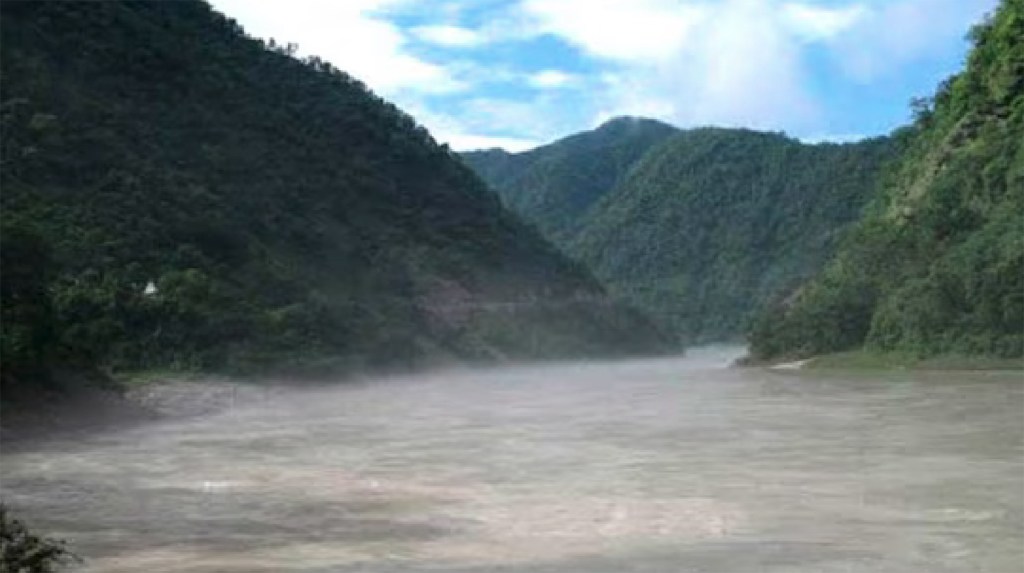
The featured image is from Facebook
 The Winds of Wonder
![[p.519]](https://incarnateword.s3.ap-south-1.amazonaws.com/imagevolumes/cwsa/23-24/519.jpg)
Leave a comment