The law of sacrifice
In The Synthesis of Yoga we have the following about the law of sacrifice obtaining in this creation:
The law of sacrifice is the common divine action that was thrown out into the world in its beginning as a symbol of the solidarity of the universe. It is by the attraction of this law that a divinising, a saving power descends to limit and correct and gradually to eliminate the errors of an egoistic and self-divided creation. This descent, this sacrifice of the Purusha, the Divine Soul submitting itself to Force and Matter so that it may inform and illuminate them, is the seed of redemption of this world of Inconscience and Ignorance. For ‘with sacrifice as their companion,’ says the Gita, ‘the All-Father created these peoples.’ The acceptance of the law of sacrifice is a practical recognition by the ego that it is neither alone in the world nor chief in the world. It is its admission that, even in this much fragmented existence, there is beyond itself and behind that which is not its own egoistic person, something greater and completer, a diviner All which demands from it subordination and service.
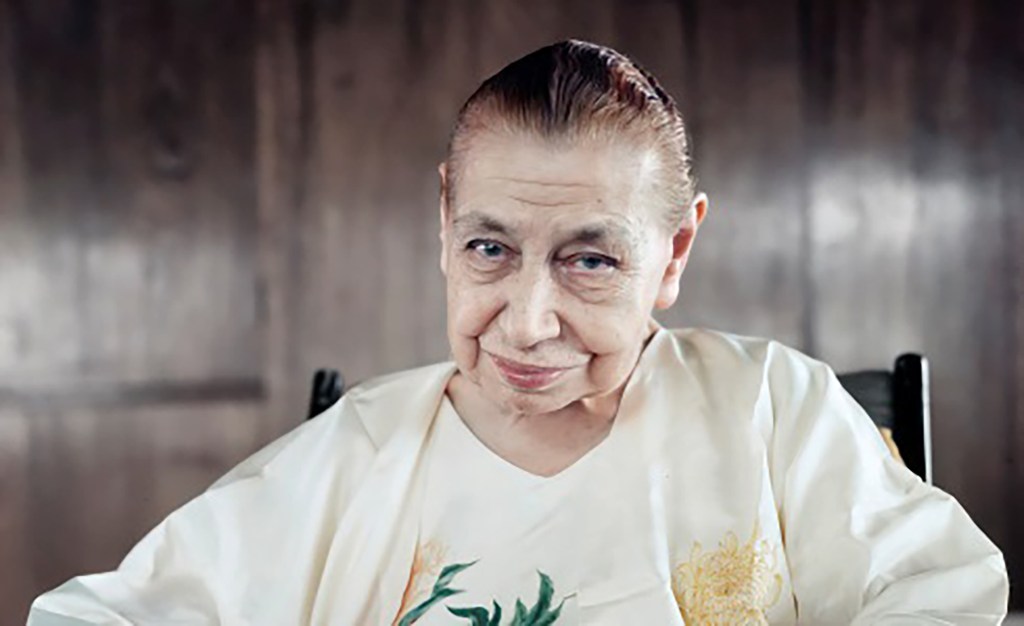
The Mother explains the aspect of sacrifice as follows:
The Divine has sacrificed Himself in Matter to awaken consciousness in Matter, which had become inconscient. And it is this sacrifice, this giving of the Divine in Matter, that is to say, His dispersion in Matter, which justifies the sacrifice of Matter to the Divine and makes it obligatory; for it is one and the same reciprocal movement. It is because the Divine has given Himself in Matter and scattered Himself everywhere in Matter to awaken it to the divine consciousness, that Matter is automatically under the obligation to give itself to the Divine. It is a mutual and reciprocal sacrifice. And this is the great secret of the Gita: the affirmation of the divine Presence in the very heart of Matter. And that is why, Matter must sacrifice itself to the Divine, automatically, even unconsciously—whether one wants it or not, this is what happens.
The Vedic Purusha Sukta thus indeed becomes very meaningful. The appearance of the four aspects is only the beginning in the process of cosmic manifestation. Only when the Four have founded their harmony and freedom can the higher powers of the Mother descend.
Sri Aurobindo looks at these powers from the point of view of Vaishnava experience as follows: Mahavira is the Brahmin embodying Knowledge and Light and wide Consciousness; Balarama, Kshatriya quality of Force and Dynamism; Pradyumna, quality of Love and Beauty—the Vaishya; Aniruddha, Shudra quality of competent service, of organisation and execution in details.
Vivekananda brings out the yogic aspect of the Chaturvarṇa in another beautiful manner. When he speaks of Jnana Yoga, Raja Yoga, Bhakti Yoga, and Karma Yoga he is also suggesting the methods available for the divine realisation for the corresponding type or quality or cast of the soul present in this manifestation.
But finally it is the Divine Mother as the Executrix who does the Yoga of Surrender to the Supreme and in his Will identifies her will, asserting “what thou willest, O lord, what thou willest”. Only the incarnation that took place in the far past times can do it and not other powers and personalities or embodiments of the Divine Mother, the Consciousness-Force of the Divine. That is the reassurance of success. That is the perfection which she alone can attain, that which other powers and personalities or embodiments cannot. That is Savitri who to pave the path was “sent forth of old beneath the stars” of the dark Night. She will remove the obstacles, of death and falsehood, standing in the way, and clear the way for the descent of transcendental powers of Consciousness-Force.
 The Winds of Wonder
Leave a comment